

Guide · Places and itineraries

What to see in Sassari: 10 places not to miss

Cover image for What to see in Sassari: 10 places not to miss

Sassari is a city that does not reveal itself all at once. You have to walk, slip into the alleyways, look up at the balconies and, if possible, stop every now and then for a coffee. No rush—we’re not exactly in Milan. From the historic centre to the major museums, passing through elegant squares, monumental churches and a prehistoric sanctuary unique in the Mediterranean, here is a short guide to the 10 things to see in Sassari.

1. Piazza d’Italia

Let’s start with the city’s elegant drawing room. With its nineteenth-century buildings, arcades and the statue of Vittorio Emanuele II in the centre, Piazza d’Italia is the ideal starting point for visiting Sassari. 

Students, workers, families and tactical aperitivo professionals meet here. Overlooking the square are the Palazzo della Città Metropolitana and Palazzo Giordano, one of the most recognisable neo-Gothic buildings in the city centre.

Stop for a few minutes and watch city life go by: in Sassari, the best show is often the people.

2. Piazza Castello and the Barbacane

A few steps from Piazza d’Italia you reach Piazza Castellotoday one of the main thoroughfares in the city centre. 

Beneath the paving lie the remains of the defensive system of the Aragonese Castle, built in the fourteenth century and demolished at the end of the nineteenth. The underground route through the Barbacane allows you to explore long military corridors and old gun positions. 

Access depends on the opening hours of the city’s cultural network, so it is best to check before your visit. The castle is gone, but Sassari has found a way to show it to you anyway.

3. The historic centre and Corso Vittorio Emanuele II

From Piazza Castello, start heading down towards the oldest heart of the city. The historic centre of Sassari is a tangle of alleyways, little squares, historic palazzi and workshops.

Corso Vittorio Emanuele II, simply known as the Corso, runs through this part of the city and is one of the main stages of the Discesa dei Candelieri. The advice is simple: every now and then, leave the main road and take a random alleyway. You might find a decorated façade, a small church or a balcony full of hanging laundry.

It may not all be picture-postcard perfect, but it will definitely be Sassarese.

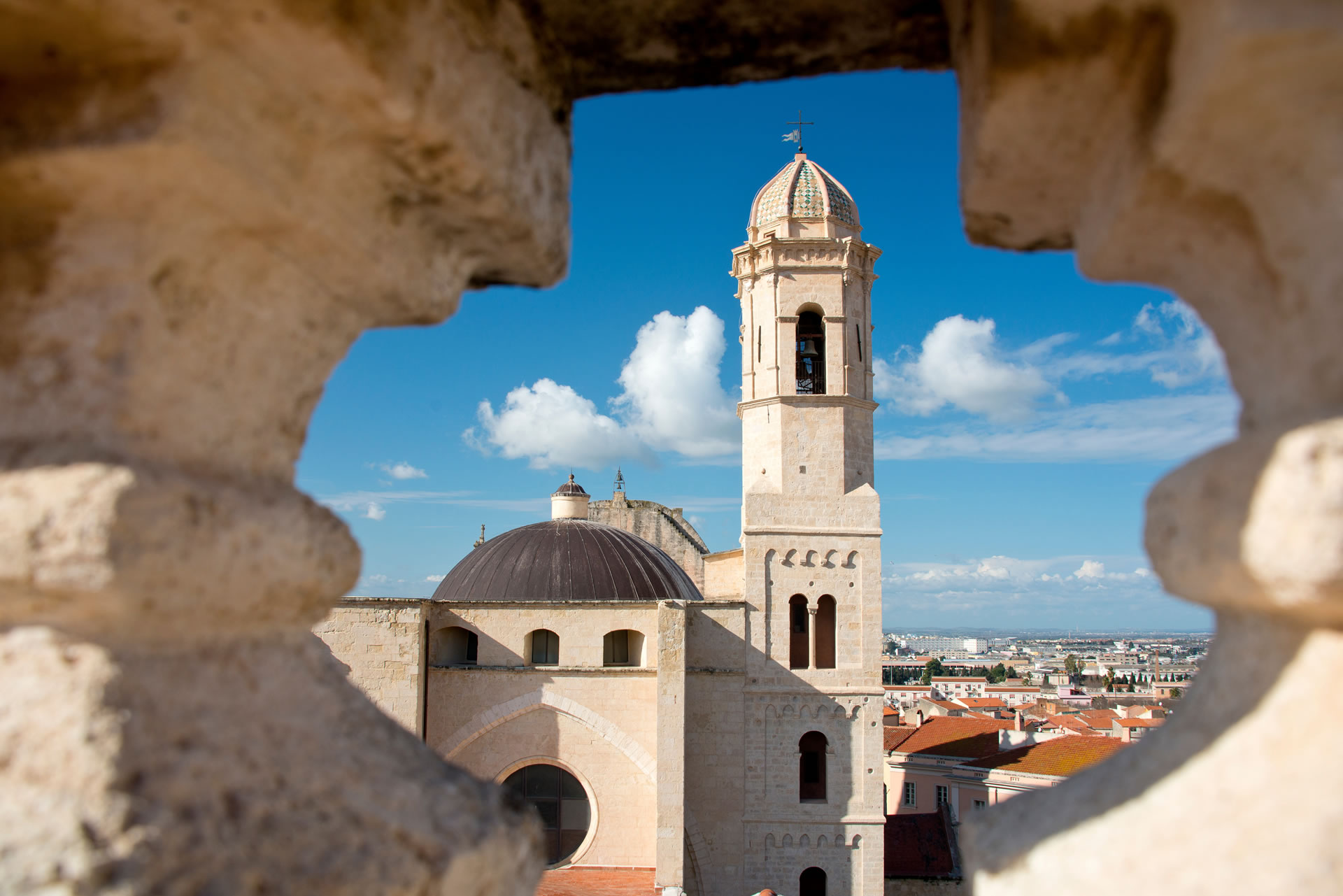
4. St Nicholas Cathedral

Tucked away among the streets of the historic centre, St Nicholas Cathedral is particularly striking for its spectacular Baroque façade, rich in columns, statues and decorations.

The church reflects several eras in the city’s history: its origins are medieval, but the building was expanded and transformed over the centuries. Inside are chapels, works of art and an atmosphere that is decidedly more intimate than the exuberance of the façade.

It is one of the essential stops for anyone who wants to discover Sassari’s historical and religious heritage.

5. Palazzo Ducale

Built at the end of the eighteenth century for the Duke of Asinara, Palazzo Ducale is now home to the Municipality of Sassari.

In addition to the courtyard and institutional rooms, the complex includes the Duke’s Rooms and Cellarswhich are part of the Thàmus museum circuit. Visits offer an insight into the life of the city’s aristocracy and the chance to see artefacts unearthed during archaeological excavations carried out in the palazzo.

The cellars include some uneven and rather narrow passages. Comfortable shoes, then: ducal elegance is all very well, but not at the cost of twisting an ankle.

6. Palazzo di Città and the Teatro Civico

Along Corso Vittorio Emanuele II you will come across Palazzo di Città, an elegant Neoclassical building constructed in the first half of the nineteenth century.

Today it houses part of the City Museum, with sections devoted to urban history, institutions, traditional clothing and the Candelieri. Inside is also the small, refined Teatro Civico, inspired by Italy’s traditional theatres.

From the palazzo’s balcony, every 14 August, the authorities watch the Faradda and take part in the traditional toast “a zent’anni” with the Gremio dei Massai.

7. The Rosello Fountain

The Rosello Fountain is one of Sassari’s most important symbols.

Built at the beginning of the seventeenth century in the late-Renaissance style, it features statues representing the four seasons and water spouts associated with the passage of time. For centuries, it was essential to the city’s water supply.

It stands on the edge of the historic centre, in a lower-lying area than the rest of the route. This means that on the way there you head downhill with great enthusiasm, while on the way back you suddenly reassess your athletic condition.

8. Santa Maria di Betlem

The church of Santa Maria di Betlem is one of the places most closely linked to Sassarese history and popular traditions.

The complex features Romanesque and Gothic elements, along with later architectural additions. Inside is also the large altar dedicated to the Assumption of the Virgin.

It is here that, on the night between 14 and 15 August, the Discesa dei Candelieri comes to an end with the fulfilment of the vow to the Madonna. Even outside the period of the Faradda, a visit helps you understand how deeply faith, Gremi and civic identity are intertwined.

9. The “Giovanni Antonio Sanna” National Museum

To truly get to know Sassari and north-western Sardinia, you need to visit the Giovanni Antonio Sanna National Archaeological and Ethnographic Museum.

The collections tell the story of the area from prehistory to the Roman period, with Nuragic, Phoenician, Punic and Roman artefacts, as well as an important ethnographic section.

In 2026, the museum route was further enhanced with the opening of the renovated Padiglione Marcialis, which houses new rooms dedicated to the Nuragic, Phoenician-Punic and Roman periods. It is the right stop for understanding what you will see later at Monte d’Accoddi.

10. Monte d’Accoddi

Let’s finish by leaving the city centre and heading into the countryside between Sassari and Porto Torres.

The prehistoric sanctuary of Monte d’Accoddi is one of Sardinia’s most extraordinary archaeological sites. Its large terraced structure, preceded by a long ramp, is reminiscent in shape of the ziggurats of Mesopotamia and is considered unique in the western Mediterranean.

The complex dates back to the Neolithic period and includes altars, menhirs, offering slabs and traces of the ancient village. A guided tour is particularly recommended, because standing in front of a huge stone pyramid in the middle of the Nurra, a few questions are bound to come to mind.

How long does it take to visit Sassari?

The historic centre can be explored in one day, following a walking itinerary from Piazza d’Italia to Santa Maria di Betlem and the Rosello Fountain.

With two days at your disposal, you can add the museums and spend a few hours at Monte d’Accoddi. Before setting off, it is always advisable to check the opening hours of the museums and guided tours.

Sassari does not try to impress visitors at all costs. It prefers to be discovered slowly, among a Baroque façade, the sound of a drum echoing in the distance and someone pointing out the way while saying: “It’s just nearby”.

Naturally, for a Sassarese, just nearby can mean absolutely anything.

Attività consigliate