
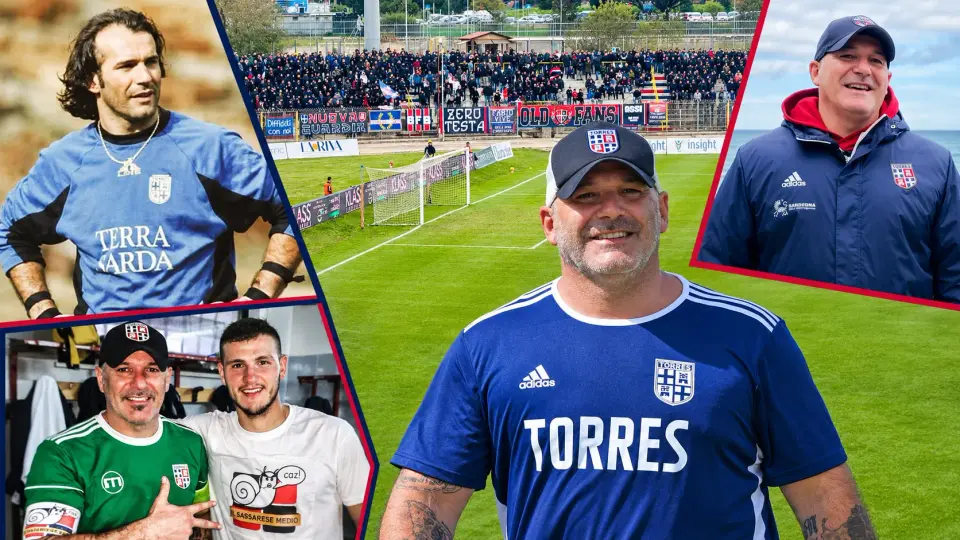
To understand what Tore Pinna represents for Torres, the record of 347 red-and-blue appearances is a starting point. The rest comes from daily work: preparing a goalkeeper, recognising a difficulty before it becomes a crisis, passing on to those who arrive in Sassari the weight of the shirt. Today Pinna carries out this role on the staff of Alfonso Greco, while the team is regaining credibility and the city must decide how to support its growth.
The win at Perugia and the draw with Spezia have given substance to the journey. But around the results remain questions that concern everyone: attendance at the Vanni Sanna, the quality of the stadium and the conditions needed to build a lasting project.
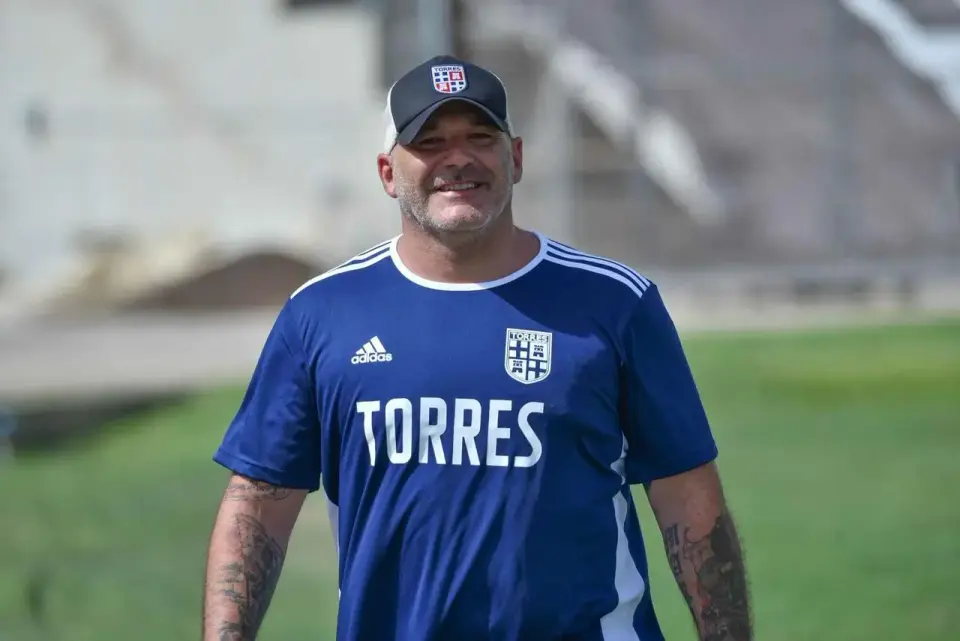
From the goal to the bench, with the same responsibility
The move from player to goalkeeping coach changes the way one experiences the match. Pinna has to entrust to others the action that was his for years, following from the bench situations in which instinct would still push him to intervene. The satisfaction now comes when the week's work is recognised in the goalkeeper's decisions. Is he succeeding? Absolutely yes!
Andrea Zaccagno is the most evident reference point of this journey. His growth concerns saves, but also his relationship with the defence: starting position, reading balls played in behind, coming off his line and the ability to take part in the game. There is a lot of Pinna in this Zaccagno.
With a high defensive line, the goalkeeper must also know how to protect the space behind his teammates. A few metres and a fraction of a second can decide whether an opponent's pass becomes a chance or is intercepted.
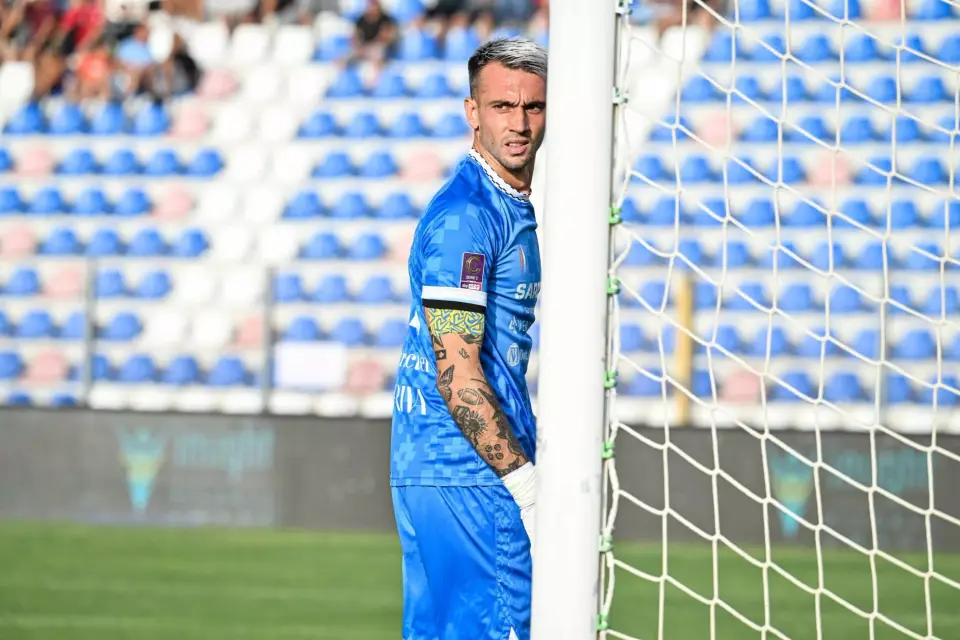
In Pinna's work, to which Pierpaolo Garau also contributes, there is certainly a careful video review, which helps make these details visible. The images make it possible to compare the position chosen with the one useful for the action; the training drills then reproduce the movements of the ball and the defence. The aim is to get the goalkeeper used to orienting himself as the game changes, until he recognises when to come out and when to stay.
Zaccagno, the saves and the work that comes before them
The 1-1 draw against Spezia on 22 November offers a concrete example. In the closing stages Zaccagno stopped Jimenez twice, helping to hold the result against the league leaders.
Behind interventions of this kind there is the shift onto the trajectory, the posture, the covering of space and the reaction to a close-range shot. Tore Pinna's experience here was certainly helpful to the young Zaccagno during training: reaching the shot already balanced, reducing the goal's target area and being ready to respond even when the ball becomes visible late.
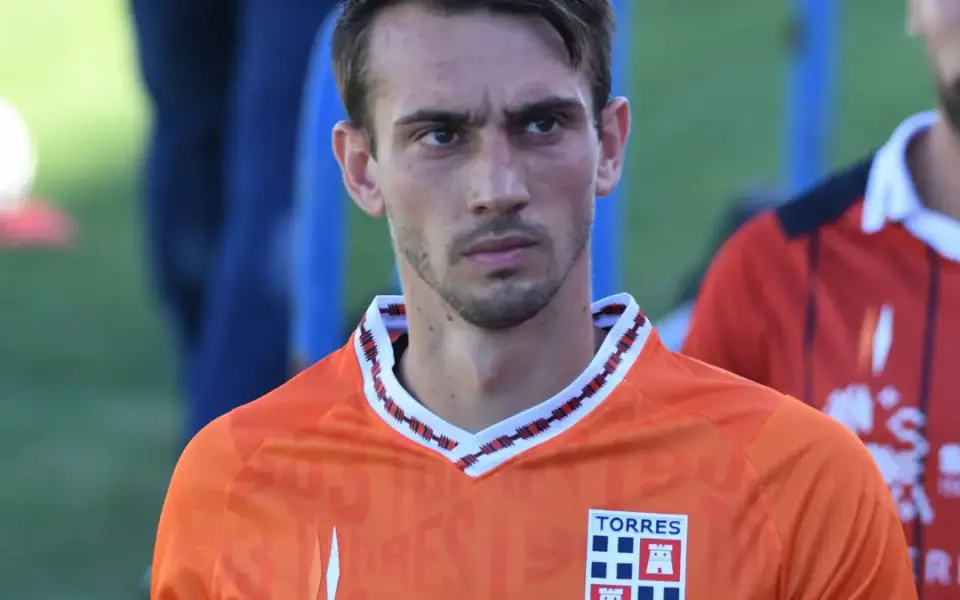
Zaccagno's growth should be read within this relationship between the player's commitment and continuous training with a mentor of Tore Pinna's experience. Attributing everything to reflexes would be as limiting as assigning all the credit to the coach. Performance comes from collaboration and the willingness to correct long-established habits.
The Pinna method: after a mistake, confidence must be rebuilt
Another element concerns the handling of mistakes. The goalkeeper may need a technical correction, but also to regain calm before the next action. A difficulty addressed only by increasing the pressure risks taking him back onto the pitch in the same state.
Pinna knows exactly what it feels like to make mistakes and receive criticism. Over the years he has collected plenty, but in past friendly conversations he has always said: "The more they criticised me, the more I felt angry like a dog in a cage, beaten and left without food. I couldn't wait to get back on the pitch and declare war on the next ball".
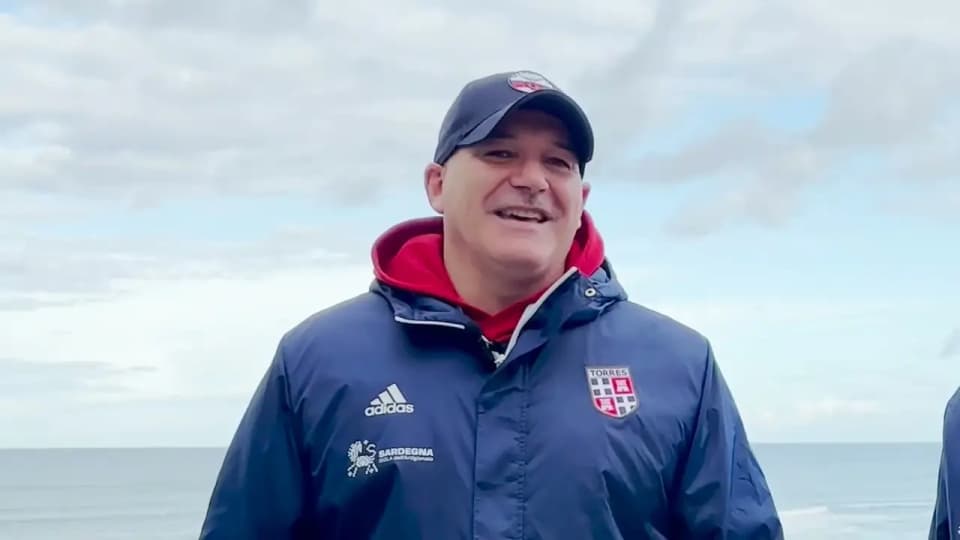
The same attention applies to those who play less. The second goalkeeper must feel part of the team during training, receive feedback and maintain a daily relationship with the staff. Waiting a long time for a chance and having to make the most of it immediately is a difficult condition, but having a coach like Pinna on the staff certainly makes it possible to cover this aspect too.
The goal against Vis Pesaro and the promotion at Mestre
Pinna's personal story helps to understand the strength of his bond with Sassari. On 27 September 1998, in Serie C2, a clearance of his from his own area became the 2-1 goal against Vis Pesaro, in injury time. A ball played long for a teammate instead ended up in the opponent's net.
The episode has stayed in red-and-blue memory for its exceptional nature. But Pinna's career also includes collective milestones: on 14 May 2000, with Bebo Leonardi on the bench, Torres won 3-0 at Mestre and earned promotion to C1.
Many years later, in June 2018, Pinna was still captain when the team returned from Eccellenza to Serie D. On that day he reached 343 appearances, surpassing the previous record; the overall tally would later rise to 347.
These are moments that cross different categories and different management periods. They explain why his presence on the staff also carries a value of continuity: those who arrive find a person who knows the ambitions of the city and its most difficult seasons.
A team to support even before the great milestones
The win at Perugia, followed by the performance against Spezia, strengthened the image of a Torres capable of competing. The group went through weeks marked by absences and found answers in collective work.
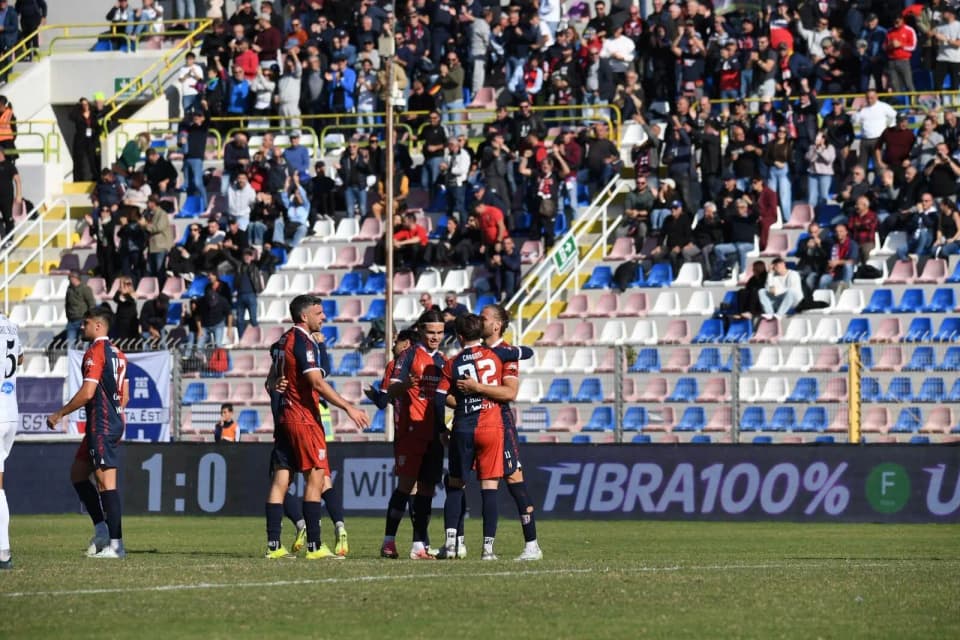
This confidence deserves a follow-up in the stands too. Against Spezia the spectators were 3,498, a figure up on the previous home match. The question, however, concerns the continuity of attendance: being able to maintain it against less anticipated opponents and in periods when results become harder.
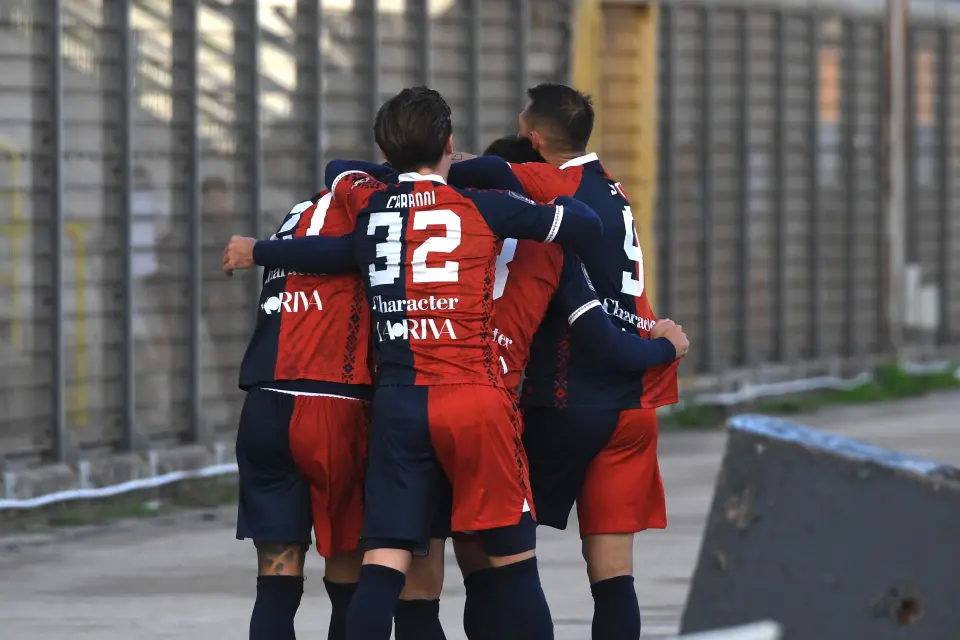 © Alessandro Sanna
As we observed in the analysis of Torres' rediscovered identity, home form offers concrete reasons to return to the stadium. The ultras and season ticket holders are a valuable base, which needs to be joined by a wider public.
Gate receipts contribute to the life of a club, together with the investments of the ownership and the sponsors. Attendance also strengthens the bond between the club and the area. To sustain a sporting ambition, this bond must be built before the milestone is reached.
The Vanni Sanna needs a recognisable project
The call for greater presence, however, meets an equally concrete responsibility: making the stadium more welcoming and functional. Distance from the pitch, visibility, accessibility and services affect the experience of anyone who buys a ticket.
Bringing the public closer to the playing field may be a goal to evaluate. However, it requires a project, technical checks, authorisations and financial coverage. The usefulness of a stand closer to the goal must find a workable form, with defined costs and timescales.
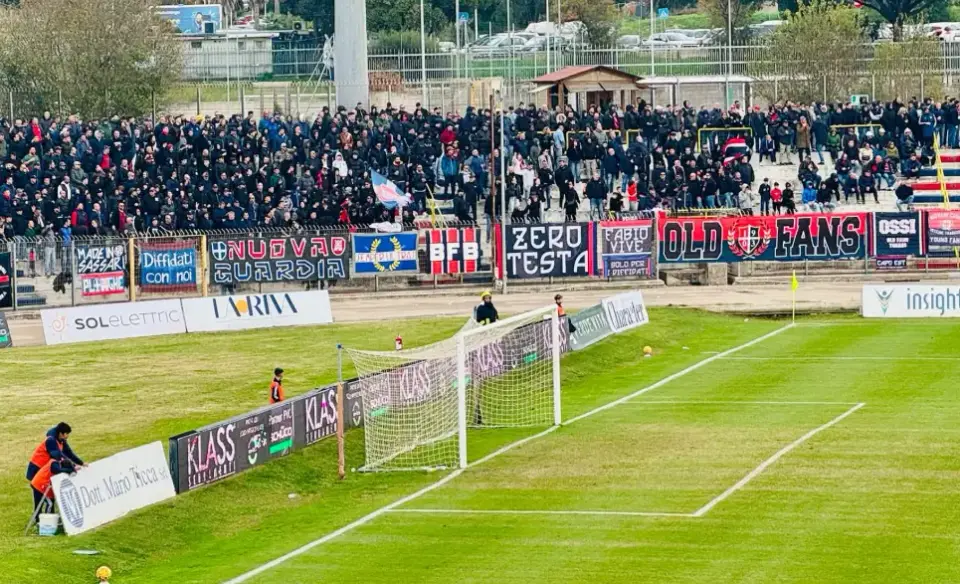
The resources already announced also need to be reconstructed precisely. In February 2026 the Municipality announced the approval of the executive project worth 1.1 million euros for the football and tennis complex, financed with one million from the Region and 100 thousand euros from the Municipality. For the stadium, works on lighting and turnstiles were planned.
In May it was announced a regional grant of one million for the pitch turf. On 2 November the Municipality also indicated a contribution of almost 2 million for the renovation and functional upgrading of the Vanni Sanna. These are communications about different works and stages: to arrive at an actual total, it is necessary to verify the respective funding and any overlaps.
In August 2026 the five-a-side and seven-a-side pitches of the complex were also completed. Useful works, especially for youth activity, which leave open the need to plan spaces suited to the first team's work as well.
The point on which to ask the administration for an account is the progress of the works: which are completed, which have been tendered and which are still to be designed, with a clear picture of the objectives.
The comparison with Cagliari
The gap with the new Cagliari stadium project inevitably fuels the debate. To assess it, it is necessary to distinguish the sources of funding.
The municipal determination of 11 November 2026 sets out an economic framework of 212.9 million euros: about 146.5 million of private capital, 50 million from the Region and 16.4 million from the Municipality. Of the latter, ten relate to demolitions and possible remediation and 6.4 cover unforeseen costs.
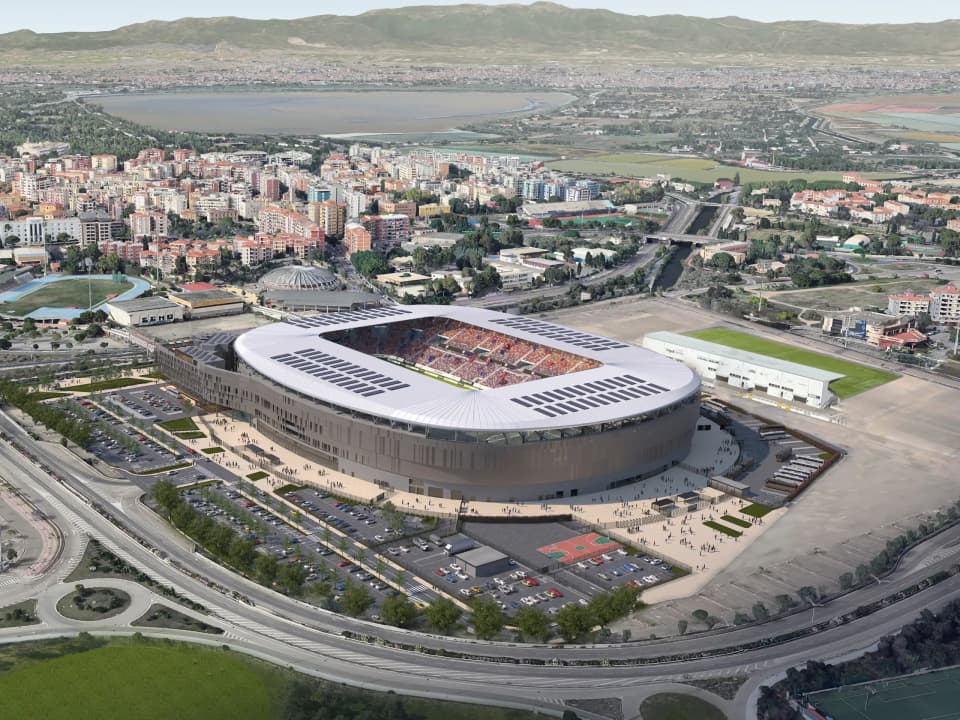
These figures show an operation of very different scale, with a strong private component. The territorial comparison can therefore concern the ability to attract investment and build infrastructure, keeping public sums separate from the overall cost.
For Sassari, the demand remains concrete: a stadium with better services, verifiable works and conditions suited to the club's growth. Pinna continues to work on the contribution he can make every day, preparing goalkeepers and passing on experience. It falls to the city, the club and the institutions to build the conditions for that work to last.
Tore Pinna and Sassari, a bond that continues off the pitch
The bond between Tore Pinna and Sassari also lives in the gestures made away from the goal, in his availability towards people and in his desire to do something for his community. We at Il Sassarese Medio were fortunate to know him in this way too: always ready to lend us a hand, especially when it came to doing good. In April 2020 he made available a sweatshirt, a shirt from his career and his gloves for a charity auction in support of the Santissima Annunziata hospital, during the Covid emergency.
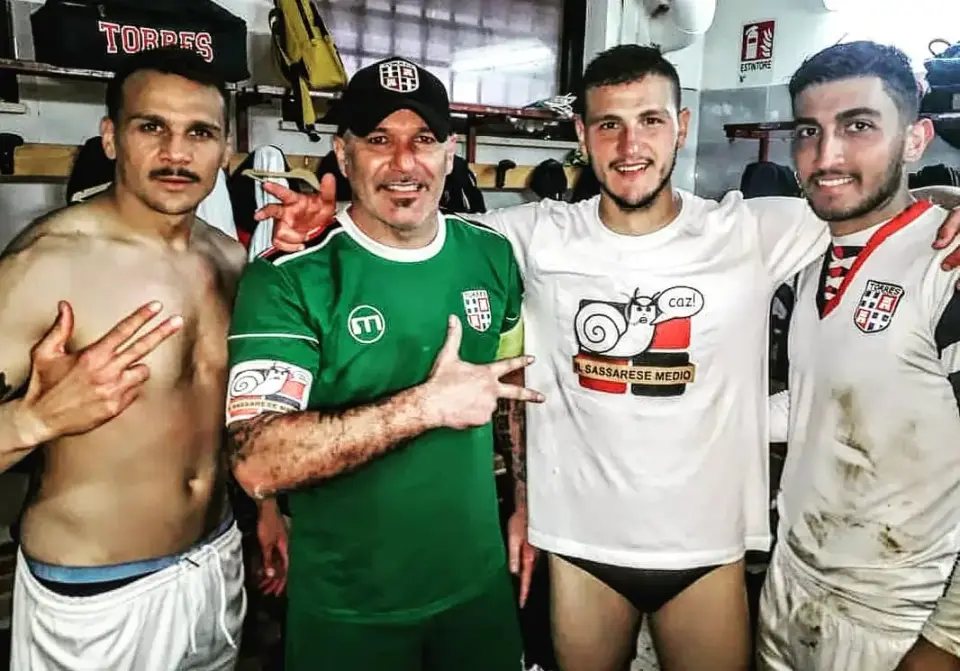
Among the memories we are most fond of there is also that photo in the dressing room, with the captain's armband we had given him tightly on his arm. Seeing one of our symbols worn by someone who means so much to red-and-blue fans was a source of pride that we still treasure today. For this reason, alongside the account of the goalkeeper and his journey, we want to add a thank you to the person: thank you, Tore, for the trust, the generosity and for always being there when we needed you.