
There is a moment during the Faradda dei Candelieri when, for a few minutes, drums and dancing give way to another entirely Sassarese ritual.
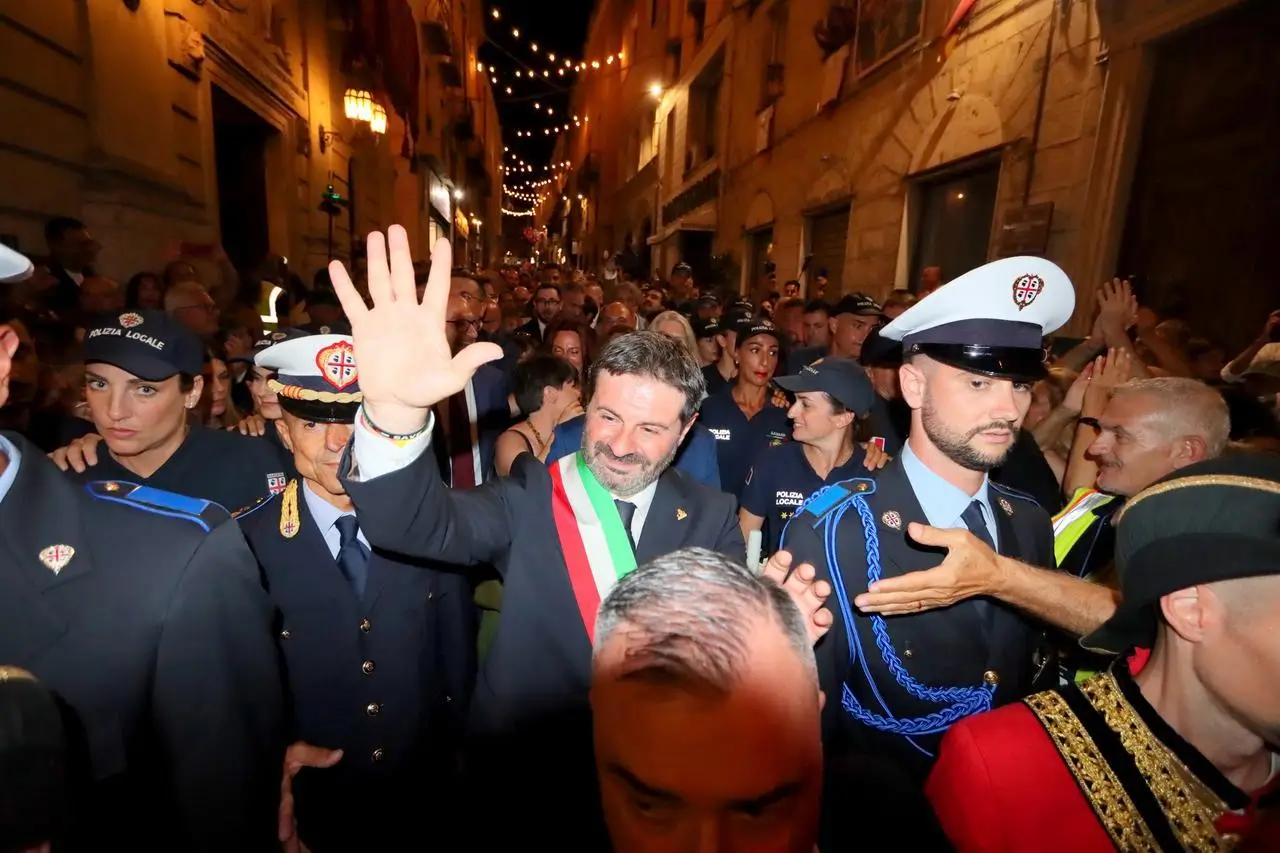
The mayor comes out of Palazzo di Città and directly faces the crowd's judgment.
Applause if the verdict is positive. Boos if Sassari has something to complain about.
It has become one of the most eagerly awaited scenes of August 14, often described as a kind of popular report card handed to the mayor each year.
But how long has this tradition existed?
The verdict comes after the “a zent’anni”
The moment is part of one of the most important stages of the Descent.
When the Candeliere of the Massai, last in the Faradda procession, reaches Palazzo di Città, the traditional meeting with the Municipal authorities is renewed.
After the exchange of insignia and the toast with the wish “a zent’anni”, the mayor leaves the Palazzo and joins the procession heading toward Santa Maria di Betlem.
The verdict comes precisely as he exits.
The crowd gathered along Corso Vittorio Emanuele can greet the mayor with applause, chants or boos.
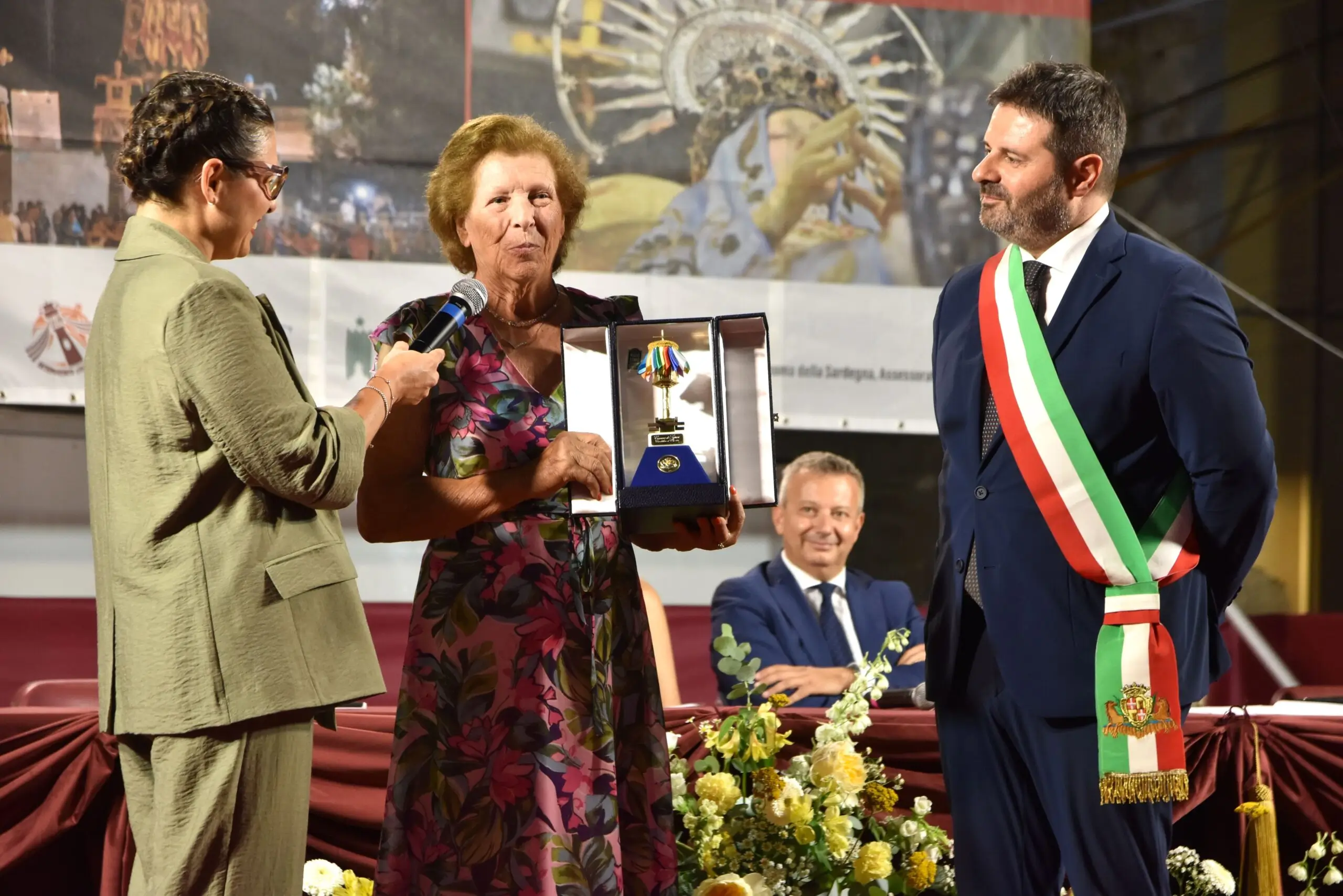
Today, even Sassari's official tourism portal describes this passage as one of the day's most eagerly awaited events and as the moment when citizens publicly express their approval or dissent toward the mayor.
A recent tradition? Not exactly
Compared with the Voto all'Assunta, the Gremi and the centuries-old history of the Candelieri, this naturally cannot be considered one of the oldest components of the festival.
But it would be equally wrong to call it a trend of recent decades.
A reconstruction published by SARdies draws on numerous twentieth-century reports that show how the crowd's judgment of the administration was already clearly recognizable many decades ago.
The most curious testimony goes all the way back to 1926.
The great booing of 1926
The episode was recounted many years later by the Sassarese journalist Aldo Cesaraccio, in an article about the Faradda published by La Nuova Sardegna in 1977.
Cesaraccio recalled personally witnessing a memorable protest against Mario Schiffi, the prefectural commissioner who headed the Sassari administration in 1926.
Schiffi appeared at the Faradda in formal attire and greeted the crowd, but received a deafening round of boos.
The episode must have made a particularly strong impression on him, since, according to Cesaraccio's recollection, the commissioner himself later returned to speak about the protest.
In short, the popular referendum of August 14 did not exactly originate with social media.
From the applause of the 1950s to the great booing of 1989
The reports recovered from the archives then reveal numerous examples.
In 1954, Mayor Oreste Pieroni was greeted with applause so loud that he was moved to tears.
Applause was also documented for Lorenzo Ganadu in 1962 and 1963, Nicolò Piras in 1967 and Benito Saba in 1971.
In 1976, Fausto Fadda, who headed the city's first left-wing administration, left Palazzo di Città amid applause and celebration. Three years later, Mayor Franco Meloni likewise received a warm welcome.
Even then, newspapers described the moment as a genuine “trial by fire” for whoever led Sassari.
Naturally, it did not always go so well.
One of the most memorable protests was the one in 1989 against Mayor Marco Fumi, who was accompanied by particularly intense boos along the rest of the route as well.
In 1998, it was instead Anna Sanna who faced the reaction, in an edition in which dozens of whistles were even handed out before the mayor's appearance, making it harder to tell how much of the protest was spontaneous.
When Nanni Campus challenged the tradition of booing
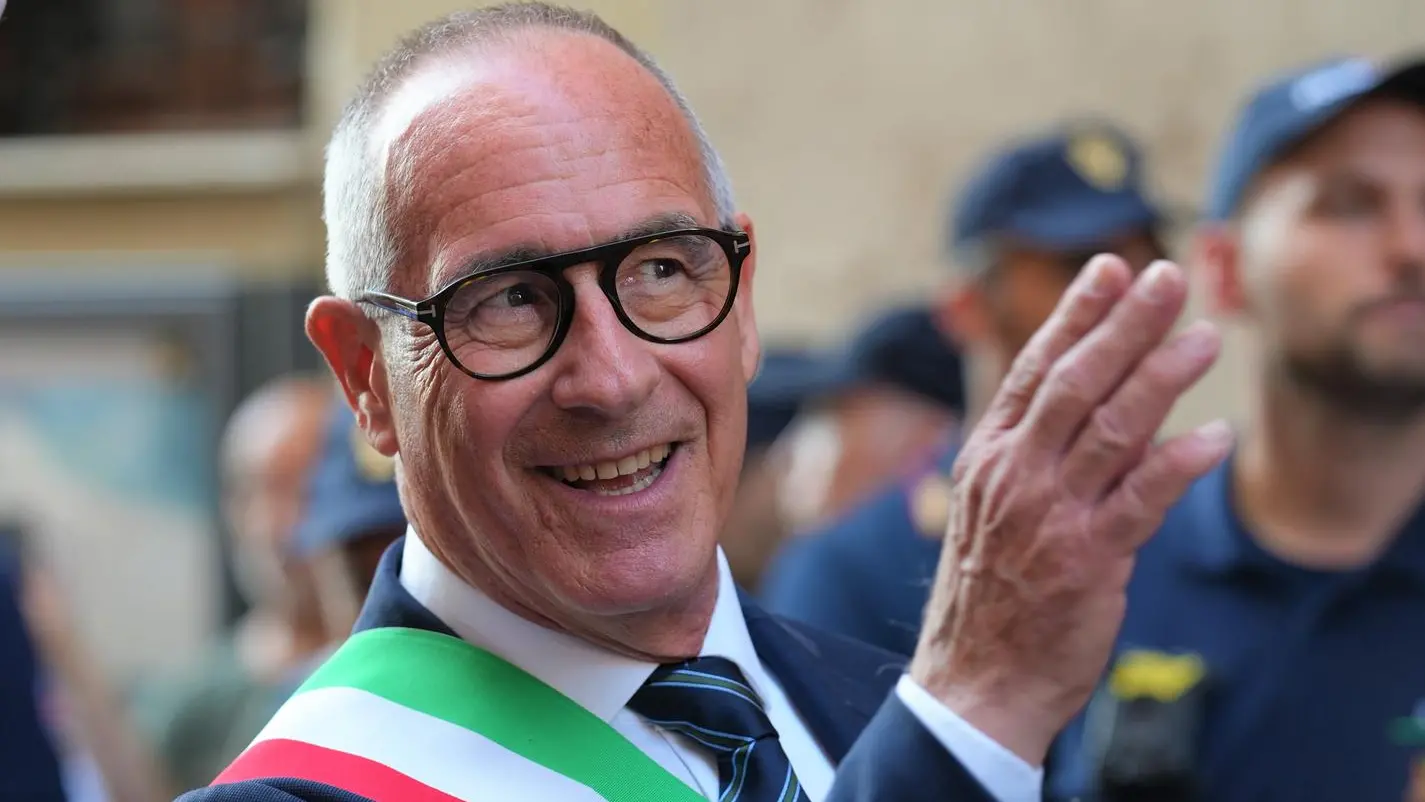
Among the more recent episodes was the Faradda 2023, when Mayor Nanni Campus was greeted with numerous boos and protests as he left Palazzo di Città.
That time, however, it was the mayor himself who questioned the meaning of the custom.
Two days after the Faradda, Campus said he could not understand why anyone would insult and boo the mayor during a religious festival, as the Municipal authorities head toward Santa Maria for the fulfillment of the Voto all'Assunta.
The mayor also said that some protesters remained silent during the procession's stops, only starting to shout again when the Municipal authorities resumed their journey, describing this behavior as “miserable”.
In fact, his position was not new.
Back in 2020, speaking about a possible Faradda during the Covid emergency, Campus had argued that the fulfillment of the Voto should not become a moment of political confrontation and that protests against the administration had other places where they could be voiced.
The episode clearly illustrates the two interpretations that continue to coexist: for some in the city, boos and applause are now a popular ritual of the Faradda; for others, however, political protest risks overlapping with the religious character of the festival.
More than a poll, a popular ritual
Naturally, applause and boos are not a scientific poll.
The makeup of the crowd changes, protests can be organized, and a particularly loud group can easily drown out everyone else present.
And yet the symbolic meaning has remained.
For a few minutes, the mayor does not address the city from a stage or during an institutional ceremony: he physically moves through the crowd and hears its reaction.
An informal, noisy form of popular judgment, perfectly consistent with the character of the Faradda.
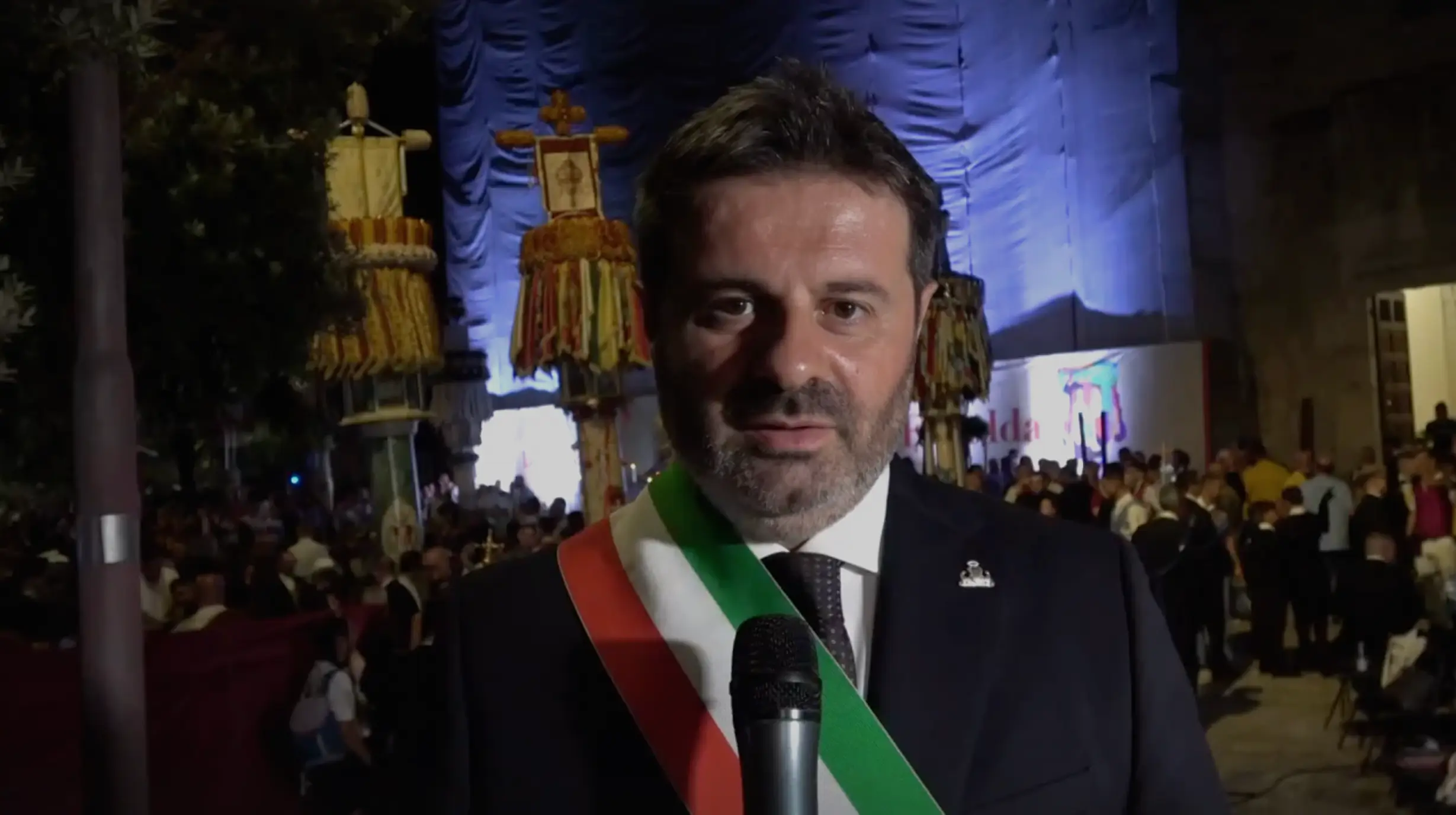
In 2026, only applause for Giuseppe Mascia
The latest edition delivered a decidedly positive verdict.
At the August 14, 2026 Faradda, Giuseppe Mascia left Palazzo di Città accompanied by applause, chants and cheers, without the protests that had characterized the descents of some of his predecessors.
It was Mascia's third Faradda as mayor and, so far, the ritual has brought him mostly approval.
The next verdict, as always, will come on the following August 14.
Because among the many things that make Festha Manna special, there is also something very Sassarese: once a year, the mayor has to walk out the door and hear, without filters, what the city thinks of him.