

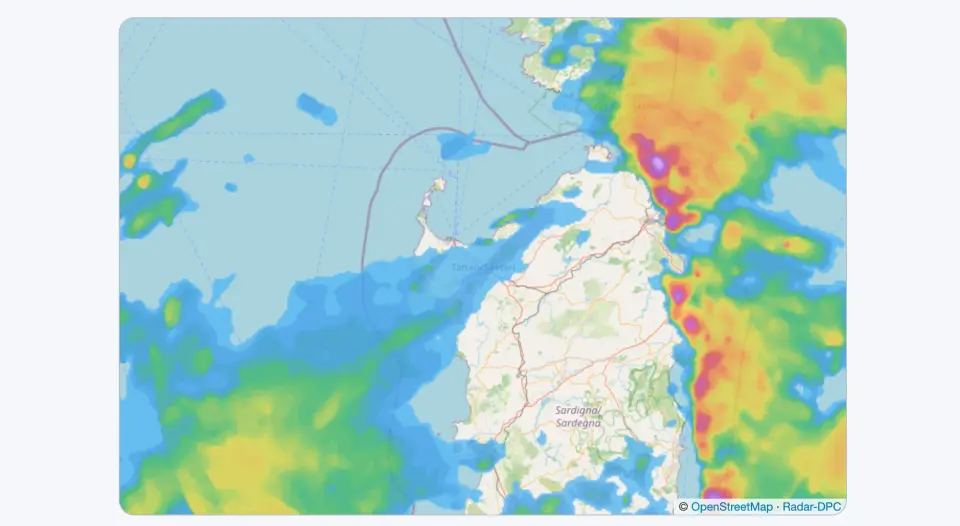
The most intense storm system forecast for Sardinia moved out to sea, about 40–50 kilometres east of the coast, without causing the feared impact on land. On Thursday, 5 November the regional Civil Protection agency lowered the alert from red to orange, while keeping a close watch on Gallura, where rain has continued since overnight.
The heaviest rainfall stayed offshore, while significant rain was recorded in some parts of the island. In Golfo Aranci, rain gauges recorded 68.8 millimetres in three hours and 117.8 in six; accumulations were also reported in Dorgali and San Pantaleo. According to monitoring reported by CagliariToday, water levels did not exceed the thresholds at monitoring stations, and the operations room received no emergency reports from the municipalities.
The director of the regional Civil Protection agency, Mauro Merella, described the impact on the territory as nil and explained that the event had put the arrangements prepared for a red-alert scenario to the test. «We were lucky because all the models were showing truly concerning situations», he said during a press briefing at the operations centre. The red alert had been issued for the rain and thunderstorms expected in the Gallura and Flumendosa–Flumineddu basin areas.
Alessandro Delitala, director of the Arpa Sardegna meteorological and climate department, said that the scenarios indicated by the models had occurred, but out at sea. Conditions in the area were conducive to intense rainfall: high levels of atmospheric humidity and instability. The storm system expected between Ogliastra and Baronie therefore mainly affected the Tyrrhenian Sea off the island.
The downgrade did not mean that monitoring measures were called off. The municipal operations centres remained open, and local administrations maintained precautionary measures, with particular attention to vulnerable people. Merella also assured that regional and national agencies were ready to support mayors if interventions became necessary.
The spell of bad weather therefore required monitoring to remain in place even after the most intense weather systems had passed offshore. In particular, Gallura remains under observation because of the ongoing rainfall. Civil Protection is keeping its response system active, and municipalities continue to operate through their own centres, in coordination with higher-level agencies.