

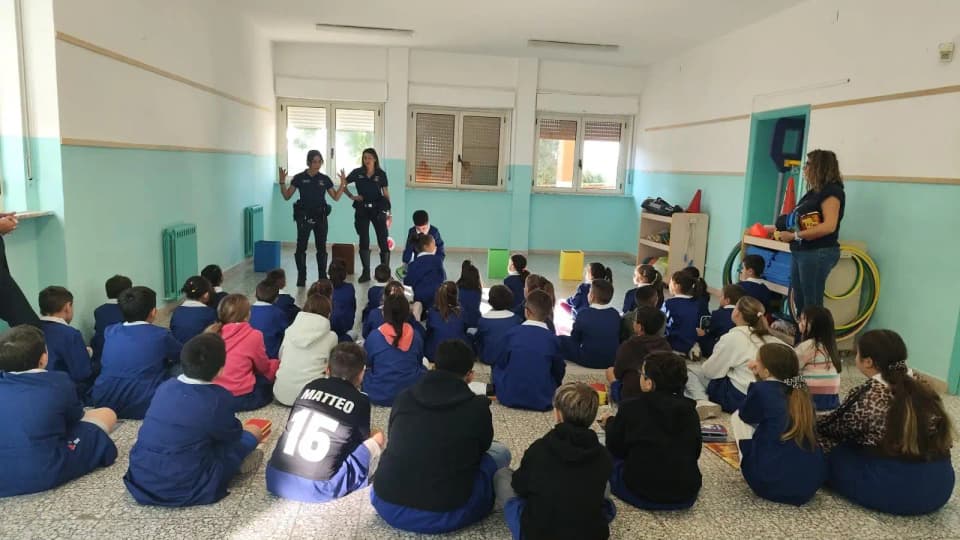
A new environmental education project by the Local Police has begun in Sassari, aimed at first- and second-grade classes at five city primary schools. Launched in the days leading up to 21 October, the initiative involves around 700 pupils and aims to teach respect for the sea and proper waste sorting through hands-on activities and games.
The programme is run by 14 officers trained in the subject and was devised by the Command on Via Carlo Felice. The initiative builds on and expands a pilot phase carried out in the previous school year, which was well received by children and teachers. It is part of the new 2026/27 school year programme, with the aim of sharing useful knowledge to protect ecosystems.
Each class will take part in three sessions, with activities focused on waste, materials and marine life. The children will try individual and team games, desk-based exercises and movement activities to learn to distinguish what can be recycled or reused and how to put each item in the right bin.
- In waste-sorting games such as “Where Does It Go?” and “Waste or Resource?”, pupils will match waste to the correct bins and discover alternative uses: bottle caps can become flowers and shoeboxes can become treasure chests.
- Sea-themed activities include “Fish for the Waste”, in which children retrieve only waste from tubs of water, and “Little Sea Vets”, where they set soft toys free from waste they have become tangled in. The games also help explain that posidonia is a resource and that removing a starfish from the water can kill it.
- The final session will take place on a beach in the Sassari area: children and officers will collect small pieces of litter using grabbers and bags. The collected materials will be weighed; the class that retrieves the most will receive a symbolic award, and every participant will receive a “Little Environmentalist” diploma.
The project addresses environmental protection by starting with everyday actions and knowledge of ecosystems. During the activities, the children will also be invited to imagine their own “ideal world” in a drawing: a way to connect the rules they have learned with the responsibility of caring for the places where they live and for the marine environment.