
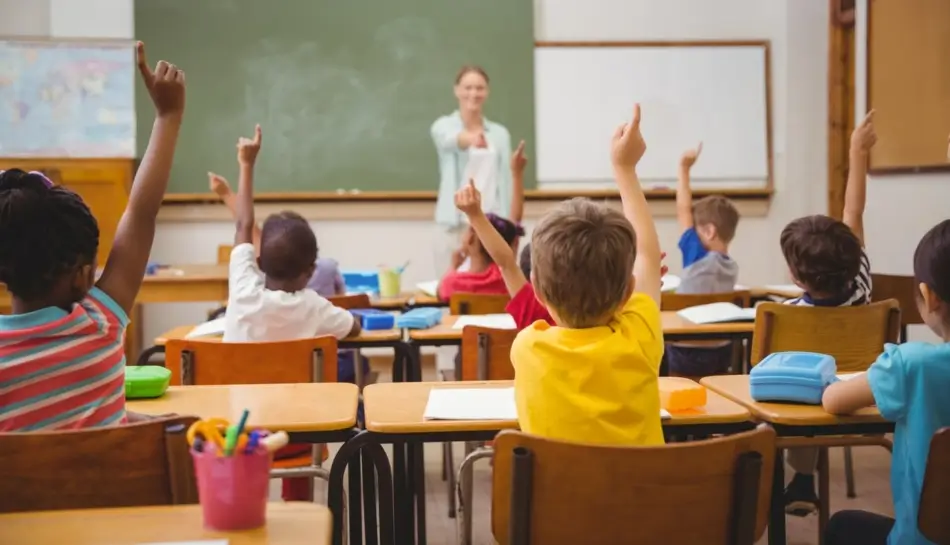
For most Sardinian students, the first school bell of the 2026/27 school year will ring on Wednesday, September 16. The regional calendar provides for lessons to end on June 8, 2027, while activities in nursery schools will continue until June 30. There will be a total of 204 school days, reduced to 203 if the feast day of the patron saint falls on a weekday. The full calendar is available in the dedicated in-depth article.
In Sassari, however, some schools have brought the start of lessons forward to Monday, September 14, using the autonomy arrangements granted to schools. Examples include the Brigata Sassari comprehensive school, the Salvatore Farina San Giuseppe comprehensive school and the Canopoleno National Boarding School. Individual schools may in fact adapt the general calendar, provided that the decision is justified and approved by the competent bodies.
New curricula for the first cycle
The main educational innovation concerns the gradual implementation of the new National Guidelines established by Ministerial Decree 221 of 2025. The change immediately affects nursery school and the first grades of primary and lower secondary school; for students already following the previous curricula, the transition will be gradual.
In primary school, greater emphasis will be placed on grammar and syntax, cursive writing, summarizing and memorizing poems. Computer science from the early years, English through daily activities and play, and music education, introduced from nursery school, will also be strengthened. In middle school, Latin may be introduced on an optional basis for language education in the second- and third-year classes, with the aim of linking Latin to the origins and development of Italian.
Smartphones, conduct and suspensions
The ban on using smartphones during school hours continues to apply in both the first and second cycles, even when the device could be used for educational activities. Exceptions related to specific, documented needs remain in place. Tablets and computers may instead be used under teachers’ supervision.
Conduct will carry greater weight in assessment. In middle school, a grade below six will result in non-admission to the next year. In upper secondary school, conduct will also affect admission to the State Examination and credits. For suspensions of up to two days, schools will provide in-house reflection activities; for exclusions lasting from three to fifteen days, active and solidarity-based citizenship activities will be introduced.
Artificial intelligence and the reform of technical schools
In the new school year, artificial intelligence will become a more established part of school life. Ministerial guidelines focus on teacher training, students’ digital literacy, and the protection of privacy, security and rights. AI-related topics will also be addressed in civic education.
AscoltaMI is also available to support families’ psychological well-being: a free listening and counselling service for students in their final year of middle school and first two years of upper secondary school. The service consists of five individual videoconference sessions and is not a psychotherapy service.
Finally, the reform of technical schools begins with the first-year classes, providing more space for scientific and technological skills, laboratories, and partnerships with universities, Its Academy and businesses. The 4+2 technological and vocational pathway also continues, consisting of four years of secondary school and two years of advanced specialization. In addition, the Mathematical Lyceum will be piloted in one hundred Italian upper secondary schools, with additional laboratory hours and interdisciplinary links.