

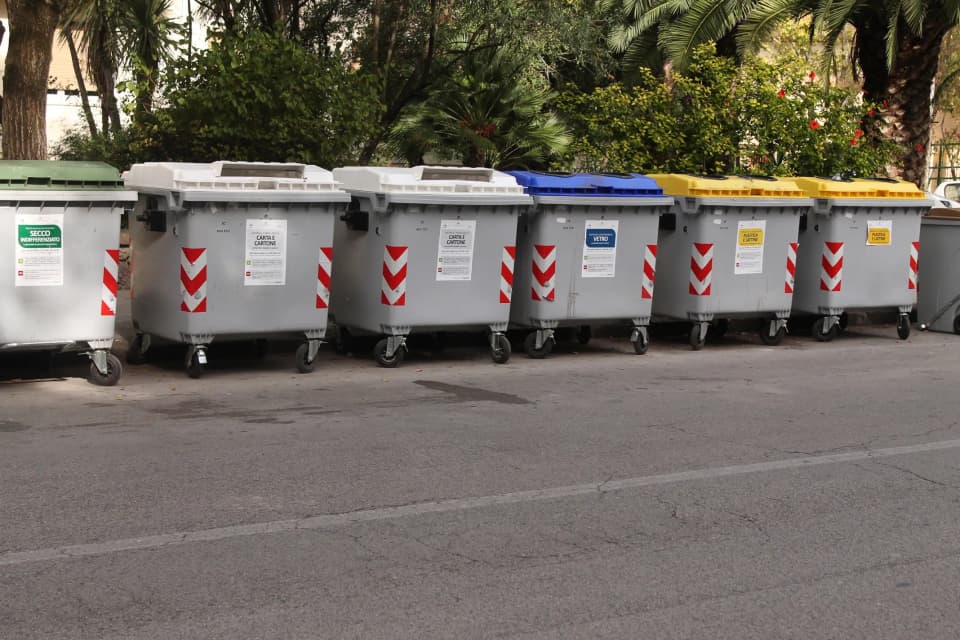
The Municipality of Sassari Environment Committee approved the new regulations for urban waste management by a majority vote on September 29. The text, already approved by the executive board, must now be examined by the City Council, so the changes are not yet final.
The revision addresses issues that emerged with the expansion of door-to-door collection, particularly in areas with large apartment buildings, limited space and differing urban layouts. The administration says the aim is to make the service better suited to the city’s different circumstances, while retaining the goal of a fully integrated system ahead of the next contract, scheduled for May 2027.
For collective users, including shopping centres and apartment buildings with more than ten households, the regulations stipulate that private areas should be identified, where possible, for storing bins and containers. Collection workers and local police officers would be allowed access with the condominium’s authorisation: workers to provide the service, and officers to check that waste is being sorted correctly.
Where there is no suitable private space, larger apartment buildings will be able to apply to use a portion of public land free of charge to install enclosures for the containers. The structures will have to meet common criteria, both in terms of function and appearance, integrating bin management with the requirements of urban decor.
The operational changes set out in the text include:
- plastic and cans will be collected together in areas served by door-to-door collection, as is already the case with street collection; plastic collection is also an issue for other municipalities on the island;
- if waste is presented incorrectly, the household will receive a notice and have 72 hours to rectify the issue;
- if the issue is not resolved, the Municipality may intervene to restore sanitary conditions and charge the costs to the household concerned;
- apartment buildings without suitable indoor space will be able to apply to use public land free of charge to install enclosures that meet common standards.
The 72-hour period does not automatically entail a financial penalty: the procedure described first allows for the issue to be remedied and, only if the non-compliance persists, provides for the Municipality to step in and recover the costs. Combining plastic and cans also changes how materials are sorted by people using the door-to-door service.
At the committee meeting, Deputy Mayor and Councillor for Transition Pierluigi Salis explained that the text addresses some of the issues facing collective users, with particular attention to shopping centres and apartment buildings. Mayor Giuseppe Mascia described the aim of preventing door-to-door collection from becoming a rigid model, by introducing exceptions and adjustments based on the characteristics of each neighbourhood. The City Council will now have to rule on the regulations.