

Currently an unpaved plot of land, marked by past construction activity and water accumulation issues, it is now set to become a public space dedicated to outdoor fitness, relaxation, and neighborhood life. This is the goal of the technical-economic feasibility study for the new Fitness Park on Via Monsignor Parodi, in Sassari's Luna e Sole district, designed by engineer Andrea Patteri. The document was presented to local residents: with the technical phase concluded, the next step will involve identifying funding channels to carry out the project, as highlighted by city councilor Nicola Ribichesu.
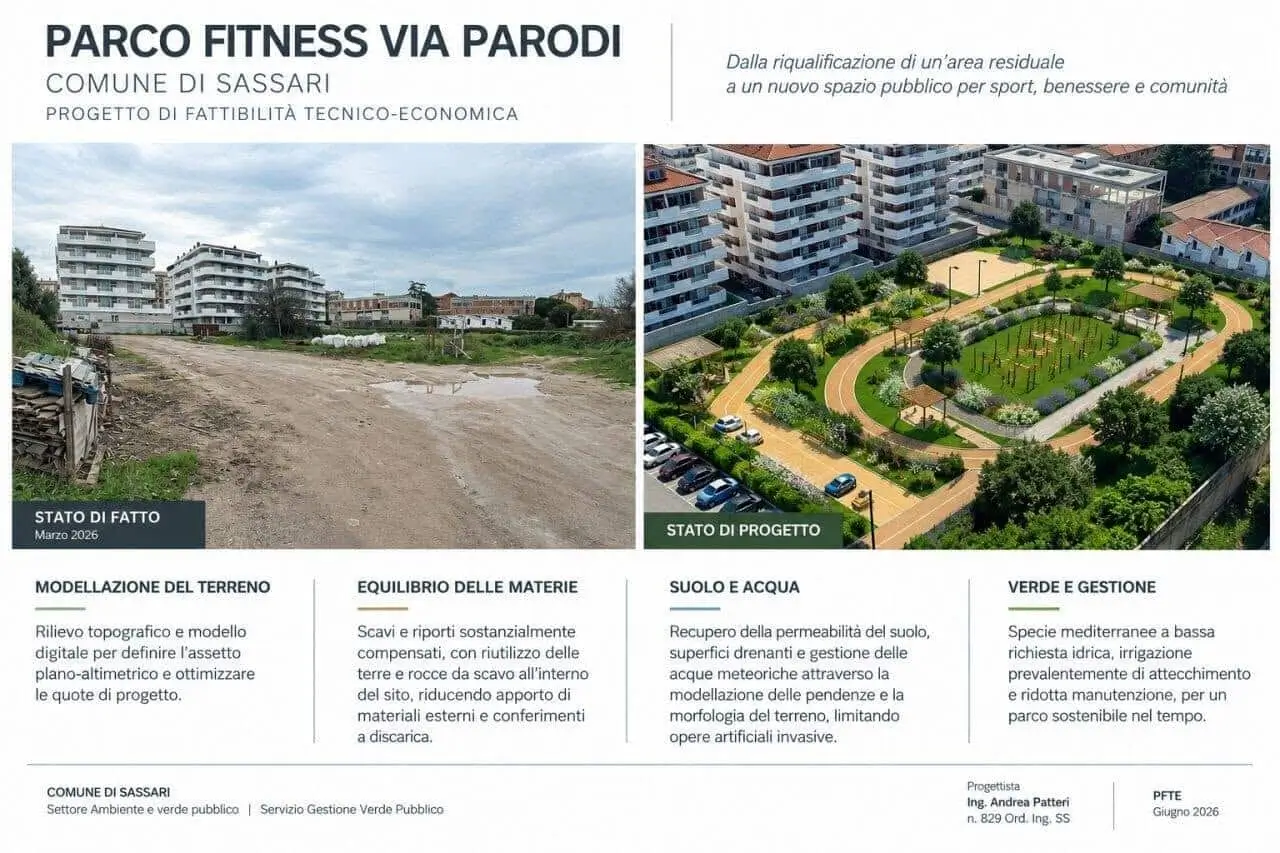
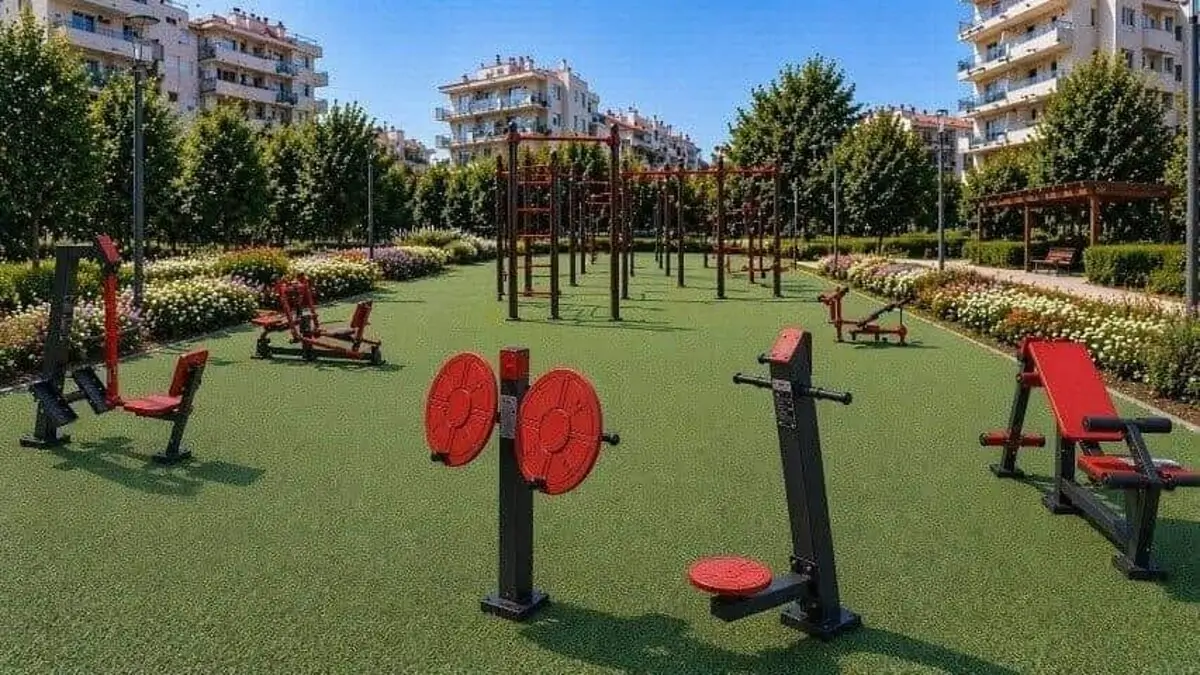
The future green space will not just host workout equipment; it will redesign the entire sector through a network of curving paths connecting the different areas. At the center will be the fitness zone, surrounded by tree-lined spaces, rest areas equipped with shading elements, and accessible walkways fitted with new lighting. The approach aims to offer a community gathering spot accessible both to sports enthusiasts and to anyone seeking an outdoor place for a stroll, expanding the network of green spaces and parks in Sassari in a residential sector also affected by the recent link between Via Milano and Luna e Sole.
One of the project's defining aspects involves soil reclamation and the sustainability of the construction work. To resolve current surface compaction and prevent standing water, the plan redefines elevation levels through specific terrain reshaping. The design strategy maintains a substantial cut-and-fill balance, reusing excavated soil directly on site to reduce material hauling to landfills and minimize external sourcing. Regarding this, Patteri explained that “Redeveloping doesn’t simply mean changing the appearance of a place. It means governing a transformation”.
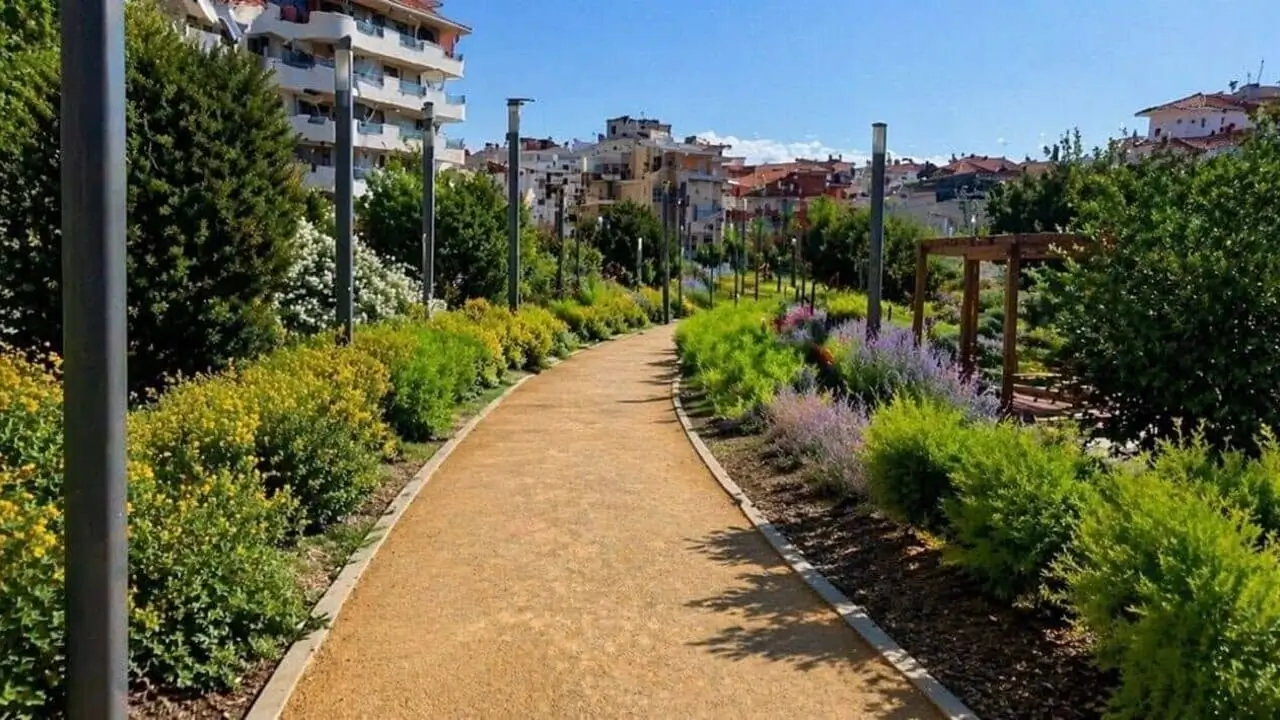
Equal attention was paid to permeability and stormwater management, supported by soil de-compaction, the use of draining surfaces, and natural slope design, minimizing the need for invasive structures. For the landscaping, Mediterranean plant species with low water requirements were selected. The plant selection is designed to ensure long-term maintenance and economic sustainability: artificial irrigation will operate mainly during the initial establishment phase and for emergency watering during the hottest spells.