

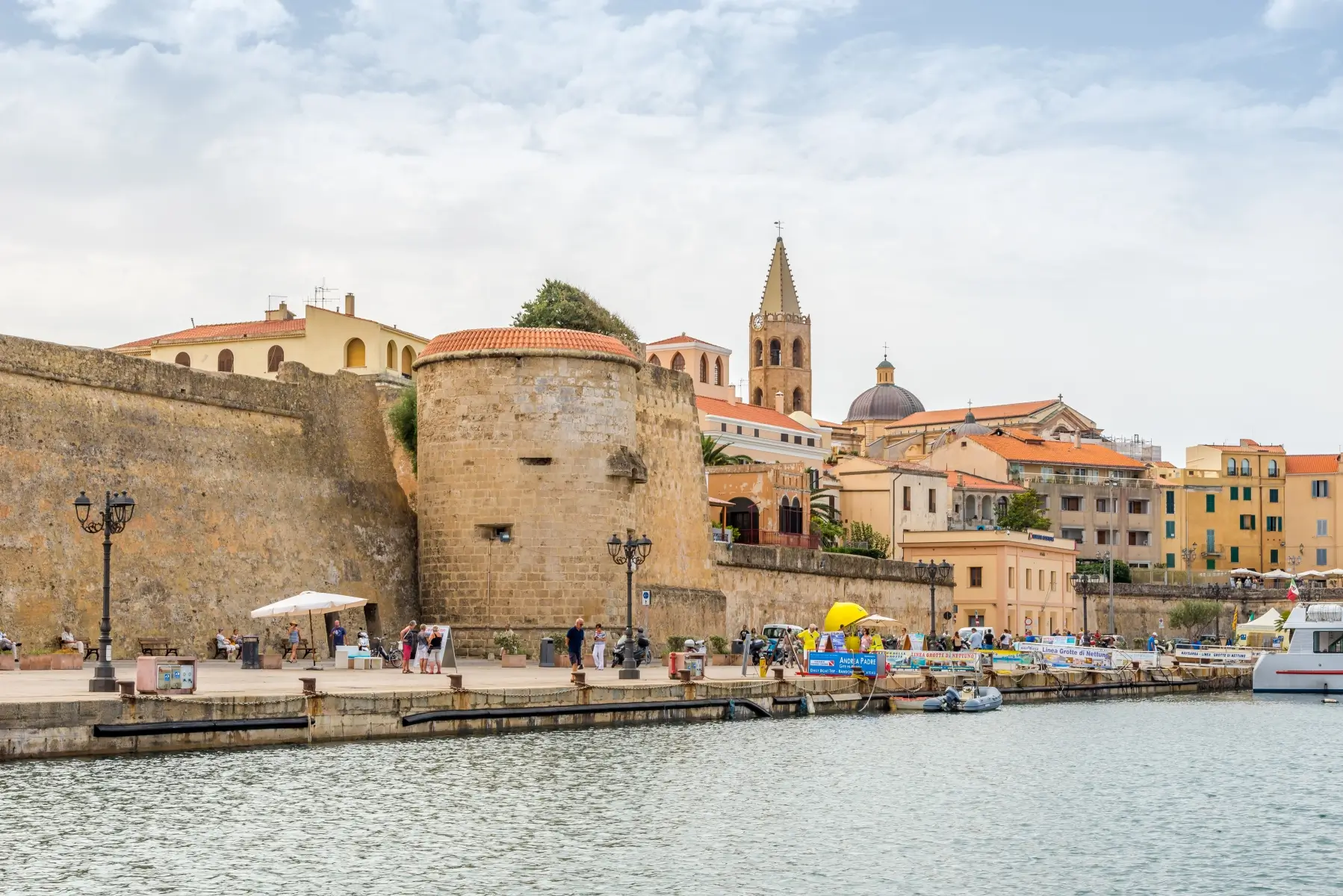
One of Sardinia’s main tourist destinations must contend with a problem that now affects much of the island: depopulation.
In May 2026, Alghero had 41,619 residents, around 150 fewer than at the beginning of the year and more than 800 fewer than five years ago, when the population stood at approximately 42,420 people.
The decline appears gradual but steady. And it takes on particular significance in a city that manages to attract thousands of visitors every year during the tourist season, but has greater difficulty retaining young people and families permanently.
By 2050, Alghero could fall below 39,000 inhabitants
The new municipal demographic projections from Istat also indicate how the future may unfold.
According to the median scenario reported for Alghero, in 2050 the population could fall to around 38,526 residents: more than 3,000 fewer people than at present.
The figure should be understood as a projection, not a certainty. Istat points out that these calculations depend on the assumptions adopted regarding future trends in births, deaths and migration flows, and become more uncertain the further they move from the starting year.
The general trend, however, is clear: in southern Italy, the demographic decline is expected to be more pronounced than in the rest of the country.
Fewer and fewer young people, while the elderly account for an increasing share
The problem is not limited to the total number of inhabitants.
Alghero’s population is also aging. The natural balance remains negative, with too few births to offset deaths, while the share of younger age groups is steadily declining.
The old-age index has now risen well above 200, indicating a demographic structure increasingly skewed toward older age groups.
This is a trend that can have direct consequences for the city: fewer students, a smaller workforce and growing demand for healthcare and services aimed at the elderly population.
Strong tourism, but living in Alghero is another matter
Alghero’s case highlights an apparent paradox.
The city remains one of Sardinia’s best-known tourist destinations, and the area is further improving its accessibility. From 2027, for example, the new direct flight between Alghero and Munich will also be operating.
But attracting tourists and managing to retain residents are two different matters.
The factors identified by the municipal administration include the decline in births, precarious employment, difficulty accessing housing, the shortage of qualified professional opportunities and young people leaving for other cities.
Mayor Raimondo Cacciotto summed up the problem as follows: “Many would like to stay in Alghero or return here, but they often cannot find the conditions to do so”.
Housing, jobs and innovation to combat depopulation
The municipality is seeking to take action on several fronts.
One of the strategies launched is collaboration with the Bruno Kessler Foundation of Trento, based on the People Strategy model: a programme aimed at making Alghero more attractive to families, researchers, professionals and businesses through innovation, research, quality of life and welfare policies.
The issue of housing also remains central to the problem. The administration aims to expand the housing supply for young couples and households in difficulty, and is considering new forms of social housing.
These measures are complemented by initiatives for families, from childcare services to subsidies for school meals and transport.
The challenge is to transform a tourist city into a city where people want to stay
Investment in the area is continuing in the meantime. Recently, more than €1.3 million was allocated to redeveloping access to Fertilia Airport, as part of the regional Le Porte della Sardegna programme. Read the in-depth article on investments in Alghero and Porto Torres.
But the demographic challenge requires something different from simply being able to attract visitors.
For Alghero, the key challenge in the coming years will be to turn tourist appeal, quality of life and investment into tangible conditions for living in the city permanently.
Because this is precisely the risk indicated by the figures: a city that is increasingly busy during the tourist months, but progressively less inhabited throughout the year.