

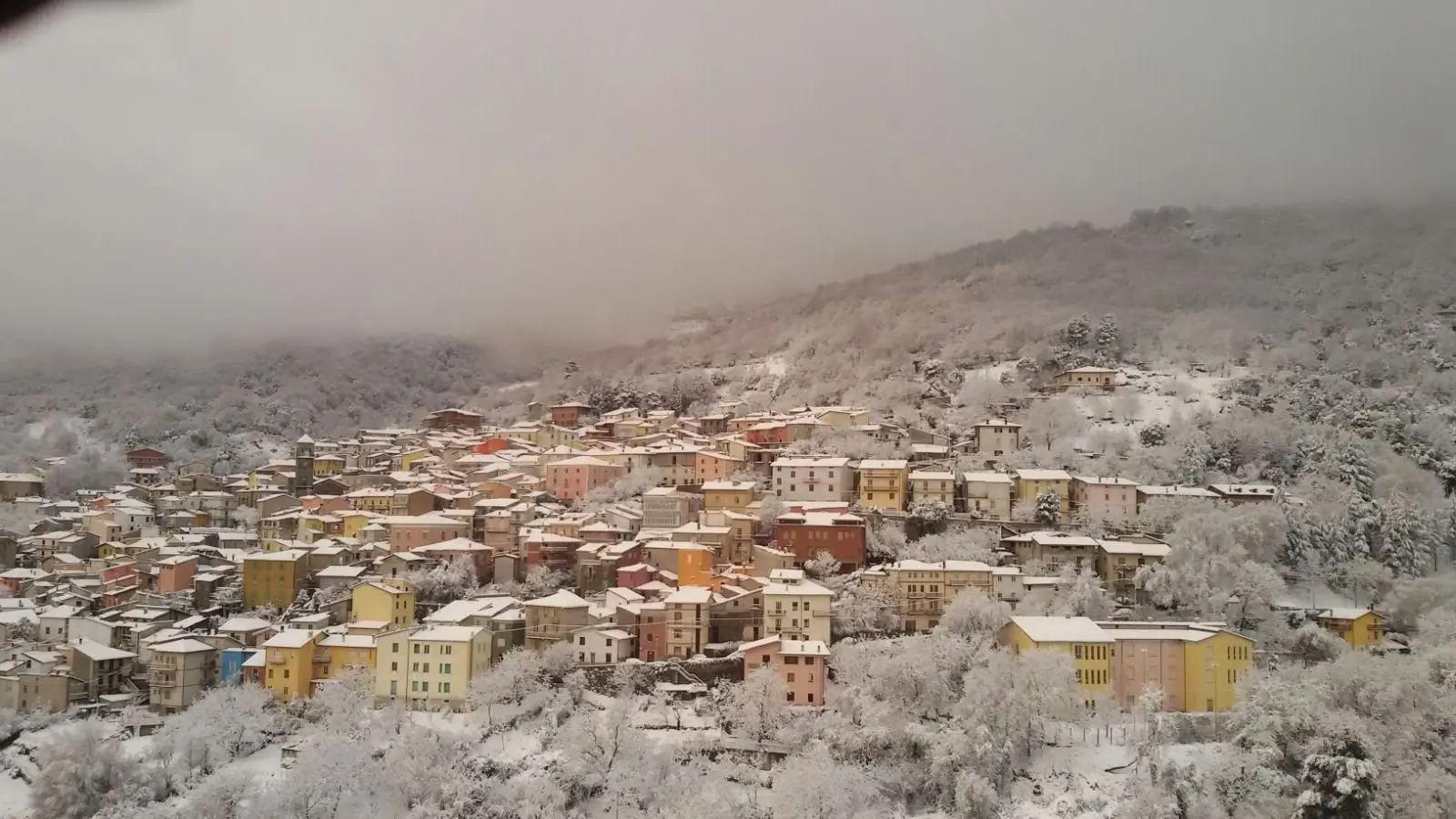
Following a summer marked by very high temperatures, seasonal projections for winter 2026–2027 outline the opposite scenario, with the possibility of significant cooling in several areas of Europe. The indications, attributed to the European Centre for Medium-Range Weather Forecasts (ECMWF), nevertheless describe model scenarios rather than a definitive forecast of how the season will unfold.
According to the reported scenario, the most intense cold could mainly affect Northern Europe, where snow could remain on the ground for extended periods. Atmospheric developments could also affect the Mediterranean and Italy, with cold and snowy spells potentially more widespread than usual in some areas.
The role of El Niño and the polar vortex
Among the factors considered by the models is El Niño, the anomalous warming of the surface waters of the equatorial Pacific. The phenomenon can alter atmospheric circulation on a global scale and interfere with the jet stream, influencing the distribution of air masses. One possibility is a weakening of the polar vortex, resulting in very cold air normally concentrated at high latitudes moving southward. This is a possible dynamic, but its intensity and effects cannot be determined with certainty in September.
Snow, roads and infrastructure under pressure
If the more severe scenario were to materialize, temperatures could fall significantly below seasonal averages and snowfall could extend beyond mountainous areas, affecting plains and coastal zones. The consequences would affect roads, transport and public infrastructure, especially in areas less equipped to deal with heavy snow and persistent freezing conditions.
The situation is also linked to the international energy landscape. A very cold winter would increase demand for gas and electricity for heating; any supply difficulties could place additional pressure on national systems. The risks mentioned also include power supply interruptions, but at present it is not possible to turn this possibility into an operational forecast.
For comparison with how summer unfolded in Sardinia, you can also read the in-depth article Sardinia Weather, New Heatwave: Temperatures Above 40 Degrees. As the ECMWF points out, seasonal projections will need to be updated and interpreted in light of subsequent atmospheric data.