

A hundred grams of mortadella, cheese for the table, fresh milk, spices for a family recipe. The story of shopping in Sassari includes shops that are still open, as well as those that disappeared long ago and signs replaced by new businesses. Ugo Multineddu’s Multimarkets, the Maini grocery stores and the old dairies are as much a part of this story as Piras, Mangatia and Alberti. Historic delicatessens, grocers and supermarkets tell different stories of shopping and getting to know the person on the other side of the counter. To find them, let’s start with a surname that left its mark on the city’s commerce: Multineddu.
Shopping in Sassari: historic shops and supermarkets
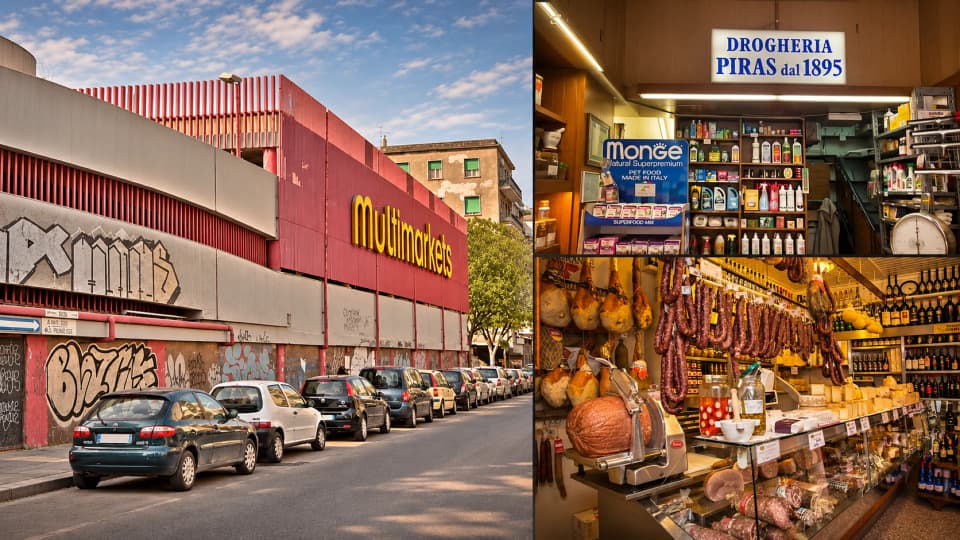
From Piras to Mangatia, from Alberti to the Multimarkets: the story of shopping in Sassari, told through delicatessens, grocers, changes of ownership and shops that have disappeared.
Shopping in Sassari
Ugo Multineddu’s Multimarkets: a vanished brand, a lasting habit
In the history of Sassari’s supermarkets, Ugo Multineddu holds an important place. In 1961 he opened a store on Via Cavour, at the corner with Via Manno. Larger stores followed, including those on Via Amendola and Via Gramsci, bringing the supermarket format into the city’s everyday life. The account published by SARdies also recalls a distinctive feature of the Multimarkets: the three checkout assistants, each with different duties—reading prices, recording purchases and bagging them.
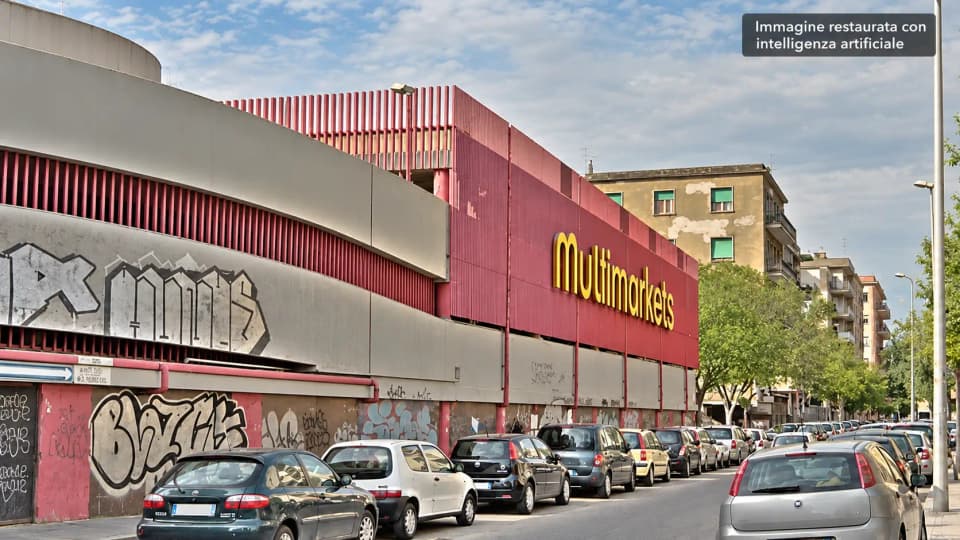
It was a service that helped customers right up to the last bag. Contemporary reports also describe staff helping transfer purchases from the trolley to the conveyor belt and load the shopping into the car.
The decisive change came in 2009, when the businesses were sold to Conad. A report dated February 20 that year documents the change at the stores on Via Gramsci, Via Amendola and Via Manno. The signs changed, while some customers continued to use the surname to refer to those places.
Drogheria Piras: on Largo Cavallotti since 1895
At Largo Cavallotti 8, Drogheria Piras still bears the name of its founder, Gavino Piras, who started the business in 1895. The date appears both in the shop’s history and in Unioncamere’s profile of the historic business.
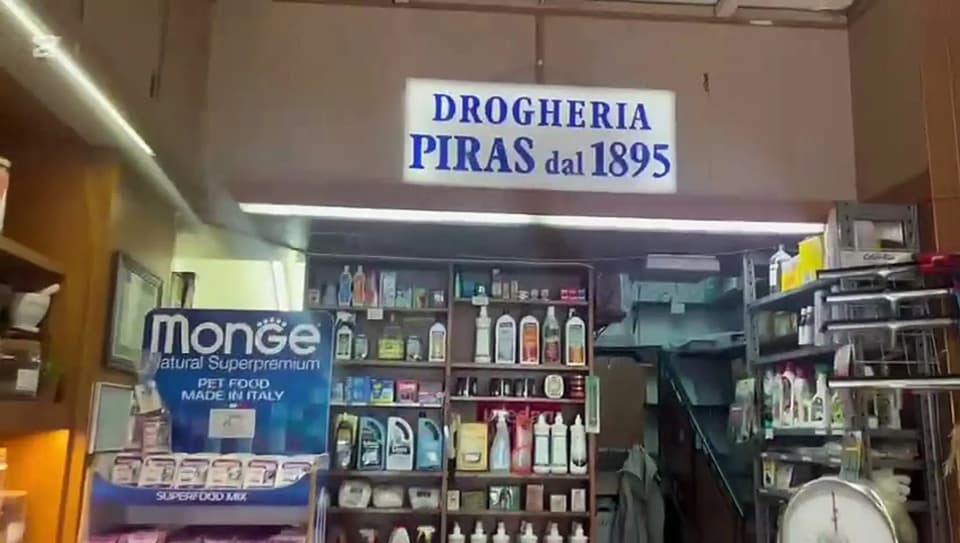
Spices, tea and coffee have been part of its identity since the beginning. Among the preparations described by the shop is concia, a spice blend used to season homemade cured meats. It is a purchase that speaks to the connection between a city grocer’s and the local tradition of home food preparation.
The business passed to the Temussi family, who kept the Piras sign. Today, the shop’s website names Carla Temussi as proprietor: continuity across different generations, under a name customers already knew.
Mangatia: more than a century on Via Università
The Mangatia Delicatessen, at Via Università 68, traces its history back to 1922. The Touring Club Italiano also gives that year and describes an offering that includes cured meats, cheeses, fresh pasta, honey and Sardinian sweets.
We explored this history ourselves in the second episode of “Custodi della Tradizione” — “Keepers of Tradition”, dedicated to the shop and published on 12 May 2026. In the interview, Pinuccio Mangatia recalls the shop’s beginnings: products made on the family’s farmland, including pear-shaped perette cheeses, other cheeses and sausages, were brought to Sassari to be sold. Over time, he explains, his father broadened the selection to include cheeses and cured hams from other Italian regions.
His account also reflects how the city has changed around the shop. Pinuccio remembers the steady flow of customers drawn by nearby offices and the university, contrasting it with the longer waits between customers today. Yet he remains open to the future. He describes shopkeeping as “a profession in transition”: younger generations, online sales and new ways of communicating can help carry it forward. In the interview, he also discusses his daughter Silvia’s contribution to the shop’s videos and social media content.
In October 2026, Silvia dedicated a video to her grandmother, Maria Chessa, gathering more memories of the shop. This effort to preserve the family’s history, covered by La Nuova Sardegna on 24 October, adds another chapter to the Mangatia story.
Alberti: the Via Roma name continues under new ownership
The Alberti Delicatessen, at Via Roma 23, was opened by Mario Alberti in 1925. The anniversary is also documented by a commemorative plaque presented by the City Council, as reported in 2016.
After Mario, his son Antonello took over the shop. In 2025, news reports covered the handover to Marcello Palmas and Maria Vittoria Salis, who took over the business while keeping its name. Marcello had already worked in the delicatessen, so the change of ownership grew out of his firsthand knowledge of the counter and its customers. This is recounted in reports on the handover and the shop’s centenary.

It is one of the stories that show how a shop can span a century and find new owners while remaining familiar to those who visit it.
The Multineddu Delicatessen on Via Principessa Maria
Alongside the story of Ugo’s supermarkets is that of the Multineddu Delicatessen at Via Principessa Maria 70, on the corner with Via Porcellana, associated with Tonino and his son Alessandro, also known as Sandro.
In an interview published in 2021, Alessandro traces the shop’s beginnings to 1957, when his aunt Giovanna Ferrando bought the premises. The shop later passed to Tonino. A subsequent interview, published in 2025, dates Alessandro’s takeover to 1998.
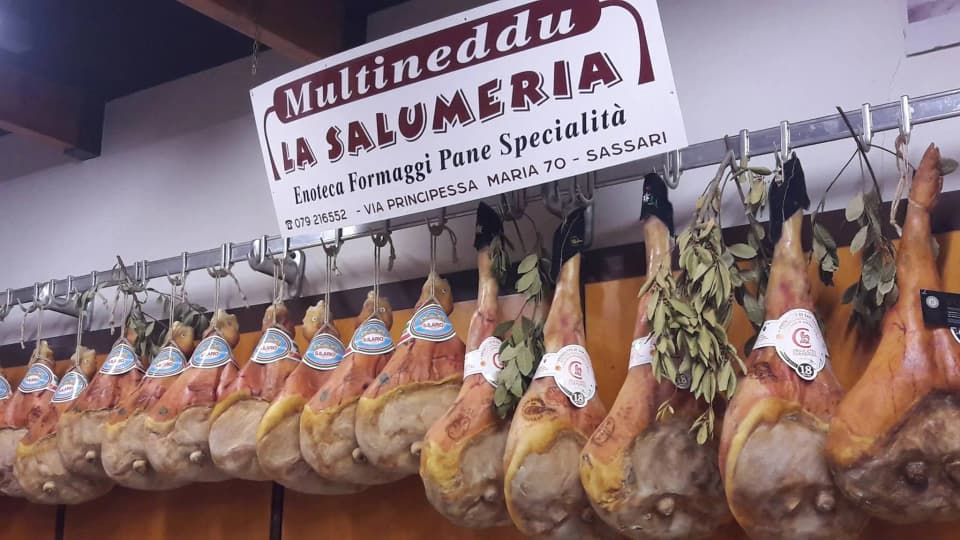
Here, the family story follows the path of a specialist delicatessen: cheeses, cured meats and a selection of pasta, including products from producers outside the island. It is another chapter in the Multineddu name’s place in Sassari’s commerce, with its own address and history. The shop also appears on the 2014 regional list of historic businesses, alongside Piras, Alberti and Mangatia.
Da Adelaide: a shop to remember
The Da Adelaide Delicatessen, on Via Capo d’Oro, is one of the businesses that have closed. Opened in 1978, it passed from its founder to her daughter Valentina Carta in 2021, according to an account of Sassari’s shops published in 2025.
A later update changes the ending of that story: in an interview on January 26, 2026, Valentina says she permanently closed the shop on December 31 of the previous year, at the end of 2025.
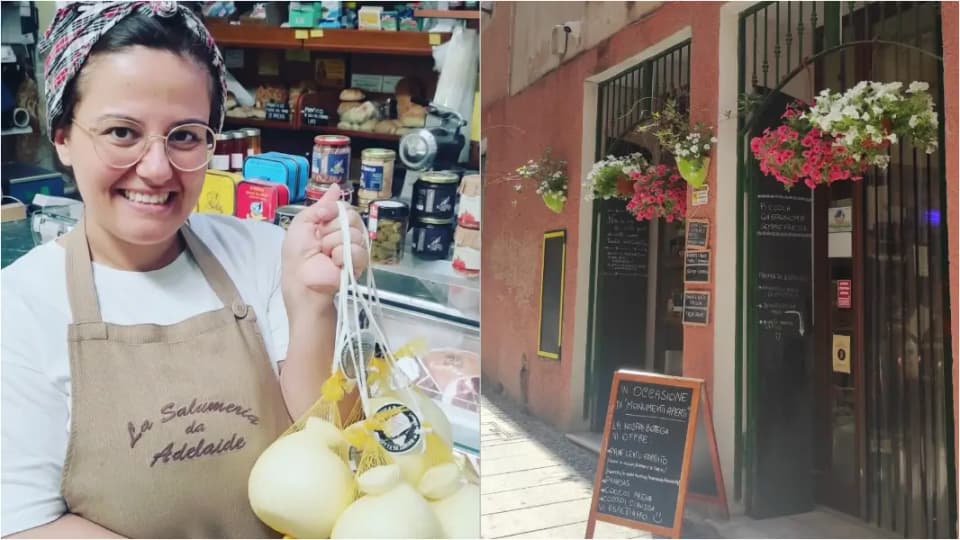
In her account, the costs and the difficulty of keeping a small business in the historic center financially viable took their toll. Remembering Adelaide also means including this part of the city’s commercial life: the daily work of someone who served a neighborhood for decades and eventually had to stop.
Maini: the grocery store on Via Università
Among the shops that have disappeared is Maini, the grocery store that stood at the beginning of Via Università, near the square of the same name. Pasquale Porcu recalls it in his account of the street’s businesses, published in March 2022, by which time the shop had already disappeared. The products mentioned include croccanti and jujubes: small purchases that bring that shop vividly to mind.
An dairy shop run by Antoneddu and Pier Paolo
The same 2022 account recalls a dairy shop on the corner with Via Casalabria, where Antoneddu worked first, followed by his son Pier Paolo. They sold fresh milk and yogurt. The shop had already been closed for years when the article appeared: its place in this guide is as one of the businesses that made up the neighborhood’s everyday shopping.
Rais Fishmonger's at Quattro Cantonate
At Quattro Cantonate, Porcu’s account locates Rais Fishmonger's, which had also disappeared by 2022. The name appears in business directories for Via Università, documenting its fish sales. It is a trace of neighborhood shopping that stood alongside the grocery stores, dairies and delicatessens along the street.
Shopping as a way to get to know Sassari
These stories offer a way to read the city through its shops: the signs that remain, changes of ownership and businesses that disappeared many years ago. To continue exploring where to shop today, see the guide to markets and street markets in Sassari. To rediscover the connection with local cuisine at the table, read the guide to typical Sassarese dishes.
The stories of these shops are preserved in this way too: by remembering the people who worked there and getting to know those that remain part of city life.