Guide · Culture and traditions

Su Mortu Mortu in Sardinia: a guide to the festival of souls, its rituals, sweets and traditions

Cover image for Su Mortu Mortu in Sardinia: a guide to the festival of souls, its rituals, sweets and traditions

Between late October and the first days of November, as autumn transforms the colours of Sardinia’s inland areas, a tradition that brings together remembrance, popular religion and community life returns to many villages across Sardinia. It is the festival of souls, known by different names depending on the area: Su Mortu Mortu, Is Animeddas, Su Bene 'e sas Animas, Is Panixeddas, Su Peti Coccone, Su Prugadoriu. There is, in fact, no single “Sardinian Halloween.” The tradition changes its form, name and wording from one village to another, but retains one recurring feature: children going door to door to ask for a symbolic offering in memory of the dead. Dried fruit, pomegranates, chestnuts, bread and traditional sweets once filled bags, baskets and napkins. Today, alongside the oldest treats, you will often find sweets and chocolates. The underlying meaning, however, remains tied to the memory of souls and the relationship between the community of the living and that of the dead.

What is Su Mortu Mortu

Su Mortu Mortu is the name used especially in the Nuoro area and various parts of north-central Sardinia for the traditional alms-gathering for the souls.

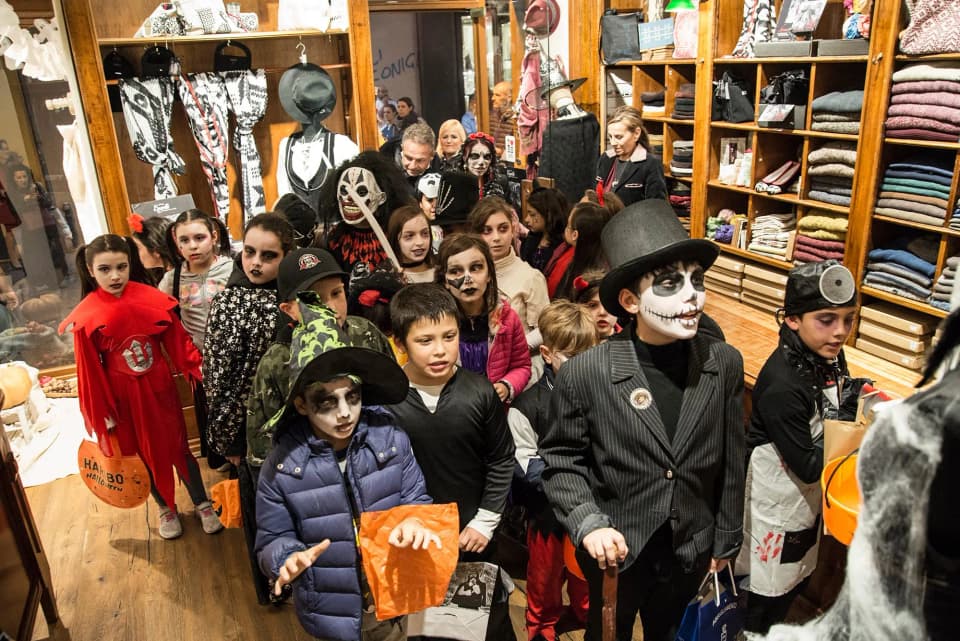
Traditionally, the children take centre stage. They move through the village streets in groups, knock on the doors of homes and ask for something pro sas ànimas, that is, for the souls of the dead.
The Sardinian Ethnographic Institute documents the alms-gathering known as “su mortu mortu” in Nuoro. During the custom, families would give children sweets and dried fruit. Over the years, the tradition has also been promoted through initiatives at the Museo Deleddiano, the birthplace of Grazia Deledda.

The festival should not, however, be considered the same throughout the island. The geography of Sardinian traditions is far more complex, and it often takes just a few kilometres to encounter a different name, rhyme or custom.
When is Su Mortu Mortu celebrated?

The period in question falls between All Hallows’ Eve and the Commemoration of the Dead, in other words, between late October and the first days of November.

The day, and even the time of day, can vary from one village to another. In some places the alms-gathering began in the morning; in others, it took place on All Saints’ Day and the Day of the Dead.

Rather than a festival governed by a uniform programme, Su Mortu Mortu should therefore be thought of as a collection of local traditions belonging to the same ritual period of the year.

What are the origins of Su Mortu Mortu?

It is probably the most fascinating question, but also the one that calls for the greatest caution.

There is no documented date for the origins of Su Mortu Mortu, nor can we say with certainty that it derives directly from a single Nuragic, prehistoric or Celtic rite.

The official SardegnaTurismo website refers to possible prehistoric roots and describes these customs as part of a very ancient heritage. At the same time, the tradition as it has come down to the present day includes elements connected with Christian religious practice, prayers for the souls, the agricultural cycle and popular beliefs about the symbolic return of the dead.

From an anthropological perspective, the time of year is particularly significant. Between October and November, a major part of the agricultural production cycle came to an end and another began. The commemoration of the dead therefore fell during a season of transition, when remembrance, harvest, winter and renewal came together.

It is therefore more accurate to speak of a tradition layered over time, rather than to look for a single origin.

The children’s alms-gathering: the heart of the tradition

To understand Su Mortu Mortu, you have to follow the children.

According to tradition, they make their way through the village streets and knock on doors to ask for an offering for the souls. The wording varies from place to place.

In Galtellì, for example, the request “carchi cosa a sas ànimas” is documented, meaning something for the souls.

In Usini and Tissi, in the Sassari area, SardegnaTurismo records a different phrase: “a fagher bene a sos mortos!”, literally an invitation to do good for the dead.

In other areas, the language, pronunciation and ritual also change, but the same gesture remains recognisable: the community entrusts the children with symbolically collecting gifts for the souls.

Ordinary bags were not always used. In some villages, children collected offerings in knotted napkins, cane baskets or other containers prepared for the occasion. SardegnaTurismo, for example, documents the use of a napkin in Bonnanaro, Bonorva, Cossoine and Torralba.

What was given for Su Mortu Mortu

Today, it is easy to see sweets, packaged biscuits and chocolates making an appearance. But the original offerings told us much more about the season and Sardinian cuisine.

Traditional gifts could include walnuts, almonds, hazelnuts, chestnuts, oranges, pomegranates, bread, autumn fruit and homemade sweets.

Among the foods most closely associated with this time of year are papassinos, sweets made with ingredients such as raisins and dried fruit, as well as ossus de mortu, copulettas and treats made with sapa, with significant differences from one area to another.

Grazia Deledda herself recalled the Nuoro tradition, describing shaped breads and sweets made with raisins, almonds, walnuts and sapa.

su-mortu-mortu-4

In some villages, there were even more distinctive treats. In Orune, for example, sas ànimas were given sa pitzinna 'e sos santos, a bread shaped like a little doll, and sos puzzoneddos, breads shaped like little birds.

For visitors, tasting autumn sweets during this period is therefore a way to get closer to a food heritage that cannot be entirely separated from the island’s religious and family history.

The table left set for the dead

Su Mortu Mortu was not just about what happened in the streets.

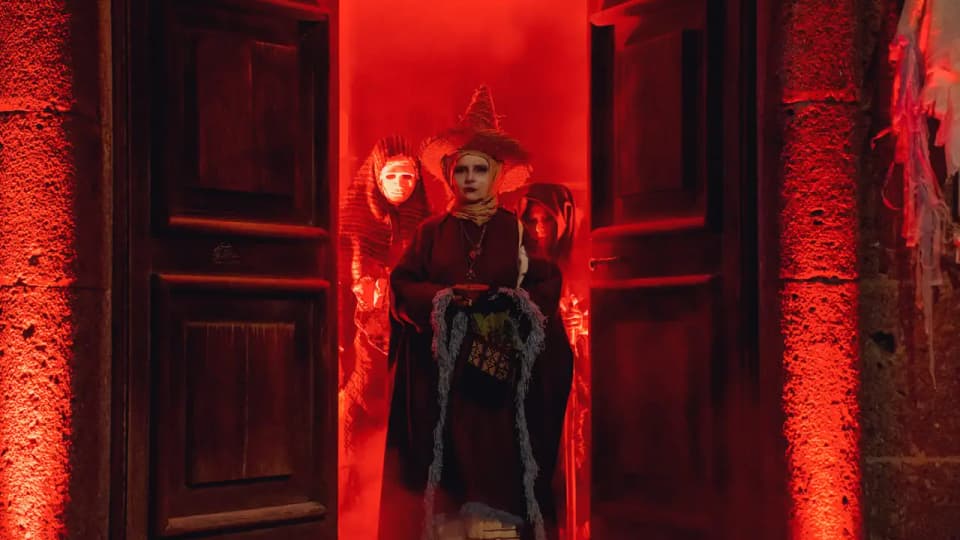
One of the most evocative customs handed down in various parts of Sardinia was to leave the table set overnight, in keeping with the popular belief that the souls of deceased family members might return to places to which they had been connected in life.

Families prepared food and, in some traditions, a simple meal. SardegnaTurismo mentions dishes made with broad beans and, in more recent times, fresh pasta, bread and wine.

These are, of course, popular beliefs and customs, not practices uniformly followed today. This domestic aspect, however, helps us understand why reducing everything to the simple collection of sweets would mean losing a fundamental part of the occasion’s significance.

su-mortu-mortu-6

How the festival changes across Sardinia

One of the most interesting things for visitors to the island is discovering how many forms the same tradition can take.

In the Nuoro area, Barbagia, Marghine and Goceano you will encounter names such as Su Mortu Mortu, Su Bene 'e sas Animas and Is Panixeddas.

In Baronia the name Su Peti Coccone is recorded.

In Logudoro SardegnaTurismo gives the expression a pedire a sos moltos.

In the Sassari area, in particular in Usini and Tissi, the phrase recorded is a fagher bene a sos mortos.

In southern Sardinia the name Is Animeddas is widespread.

In Seui and parts of Ogliastra the festival is known as Su Prugadoriu, an obvious reference to Purgatory.

This variety is essential: Su Mortu Mortu should not be used as a catch-all label for every Sardinian tradition relating to the dead. It is more accurate to see it as one name in a much broader ritual mosaic.

Are Su Mortu Mortu and Halloween the same thing?

No, although there are clear similarities.

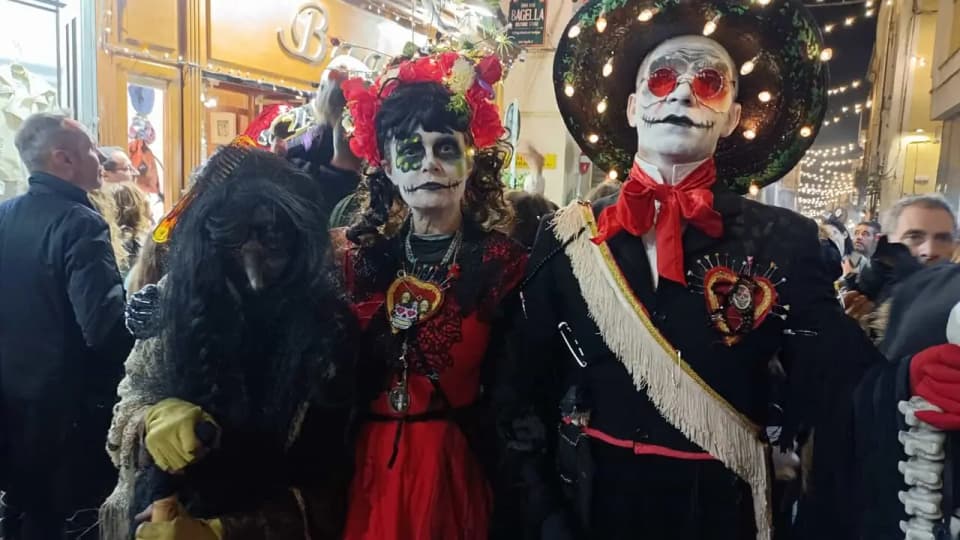
In both cases, we find children going from house to house, food offerings, stories connected with the dead and, in some parts of Sardinia, even an ancient memory of pumpkins turned into lanterns.

These similarities, however, do not prove that the Sardinian tradition derives from Halloween, nor do they allow us to automatically establish a common origin.

su-mortu-mortu-5

Sardinian alms-gathering customs and rituals dedicated to the dead were practised locally well before contemporary Halloween became a popular commercial phenomenon in Italy. At the same time, it would be just as reductive to claim that Su Mortu Mortu is simply “the original Sardinian Halloween.”

The best way to understand it is to see it for what it is: a Sardinian tradition connected with souls and the memory of the dead, which developed according to its own customs and practices.

Where to discover Su Mortu Mortu in Sardinia

For anyone visiting Sardinia between late October and early November, Nuoro is one of the most significant places to start.

The Su Mortu Mortu tradition is particularly well known and documented here. Over the years, ISRE, the Sardinian Ethnographic Institute, has also helped promote it through the Museo Deleddiano.

But it would be a mistake to limit your visit to Nuoro. Barbagia, Marghine, Goceano, Logudoro, the Sassari area, Baronia, Ogliastra and Campidano offer different interpretations of the festival of souls.

For anyone staying in the north-west of the island and wanting to learn more about the area’s historical and ethnographic heritage, it may be worth combining the trip with a visit to the museums of Sassari, starting with the Giovanni Antonio Sanna National Archaeological and Ethnographic Museum.

If your visit also takes in the city of Sassari, our guide to things to see in Sassari includes some of the main places where you can discover the city’s history and culture.

How to experience the tradition as a visitor

Su Mortu Mortu is first and foremost a community and family tradition, not a folkloric show created solely for tourists.

If you are in Sardinia at this time of year, the best way to discover it is to check what is being organised by individual municipalities, museums, cultural associations and local communities. Events can vary considerably from one year to the next.

su-mortu-mortu-7

In smaller villages, it is also important to observe the tradition respectfully, especially where the playful side of the alms-gathering still exists alongside its religious and commemorative aspects.

The most interesting experience does not necessarily involve looking for a major event, but rather understanding the differences between villages, listening to the phrases used by children, tasting seasonal sweets and discovering how each community preserves its own memory.

Su Mortu Mortu today: a living tradition

Over time, the offerings have changed, some domestic customs have become less common and Halloween has become a permanent part of young people’s imagination.

And yet, the traditional alms-gathering continues to be remembered, revived and passed down in various parts of Sardinia. This is also reflected in the work of cultural institutions, which over the years have organised specific initiatives dedicated to Su Mortu Mortu and the other festivals of souls.

Perhaps one of the most interesting things about the tradition lies precisely in its ability to change.

For behind a bag full of papassinos, chestnuts or sweets, a much older and deeper gesture continues to survive: remembering those who are no longer here by sharing food, and entrusting children with keeping the bond between generations alive, at least for a few days.

su-mortu-mortu-8

Frequently asked questions about Su Mortu Mortu

When is Su Mortu Mortu celebrated?

The celebration is associated with the period between late October and the first days of November, around All Saints’ Day and the Commemoration of the Dead. The day and customs may vary from one village to another.

Where is Su Mortu Mortu celebrated?

The name Su Mortu Mortu is particularly associated with the Nuoro area and north-central Sardinia, but similar traditions are found throughout the island under different names.

What do children receive?

Traditionally, dried fruit, chestnuts, pomegranates, citrus fruit, bread and typical sweets, including papassinos. Biscuits, sweets and chocolates are also common today.

Is Su Mortu Mortu Sardinian Halloween?

It is a useful way to explain some similarities quickly, but it is not entirely accurate from a historical and cultural point of view. Su Mortu Mortu belongs to the Sardinian tradition of commemorating souls and has its own customs, names and meanings.

Attività consigliate